An Introduction
What Is Private Jet Charter?
Private jet charter is the on-demand hire of a whole aircraft for a single passenger, family or group — as opposed to buying an individual seat on a scheduled commercial flight. The aircraft is yours alone for the duration of the trip. Nobody else boards it. The departure time, the routing, and every detail of the journey are arranged specifically around your itinerary rather than a published timetable shared by hundreds of other travellers.
The concept is not new — business aviation has existed since the 1960s — but it has become dramatically more accessible over the past decade. Where chartering an aircraft once required a standing relationship with an operator and days of notice, digital booking, broader aircraft networks and platforms like Totripjet mean a private jet can now be arranged in the time it takes to have one phone call.
In Nigeria specifically, private jet charter has grown alongside the country's expanding business, government and oil & gas sectors. Domestic commercial schedules between major cities are limited, delays are common, and many working professionals now treat chartering as a practical business tool rather than an occasional indulgence.
That shift is visible in who charters and how often. A decade ago, charter clients in Nigeria were almost exclusively corporate accounts booking a handful of flights a year. Today, Totripjet arranges single one-off charters just as often — a family attending a wedding in another state, an executive with one urgent same-day meeting, a small group travelling to a burial or naming ceremony on short notice. The barrier to entry has fallen because the booking process has become faster and the aircraft network broader, not because private aviation itself has changed.
Why Clients Actually Charter
Popular Travel Purposes
Beyond the broad categories of business and leisure, most Totripjet bookings fall into a recognisable set of specific occasions:
- Board meetings and investor visits requiring same-day return travel between cities
- Weddings, naming ceremonies and burials where several family members need to travel together on short notice
- Oil & gas site visits to locations with no scheduled commercial service
- Medical evacuation and urgent specialist appointments requiring immediate departure
- Religious pilgrimages and delegation travel for groups travelling together on a fixed schedule
- Sporting events and tours for athletes, teams and support staff with tight fixture calendars
- Diplomatic and government missions requiring secure, precisely scheduled movement
- Multi-city business roadshows covering several destinations in a single trip
If your reason for travelling isn't listed here, it almost certainly still applies — these are simply the most common patterns we see, not an exhaustive list of what we will arrange.

Who Charters — And Why
Why Private Jet Charter Exists
Private jet charter exists because commercial aviation was never designed to serve an individual itinerary. Airlines build schedules around aggregate demand across an entire network — not around one traveller's specific meeting, delegation, or family occasion. For anyone whose time carries a high cost, that mismatch adds up quickly.
Totripjet's clients span business executives moving between meetings, government officials and diplomats travelling under time and security constraints, oil & gas professionals connecting to sites with limited scheduled service, medical evacuation cases requiring rapid response, and families who simply value privacy and flexibility over a lower fare.
What unites all of them is not wealth for its own sake — it is a recurring need for control over time, routing, and privacy that no commercial itinerary can offer.
The Real Advantages
Why Choose Private Jet Charter Over Commercial Airlines
Commercial air travel is built around the airline's schedule, not yours. Private jet charter inverts that relationship — the aircraft, the crew and the timing exist to serve your itinerary. The difference is not a luxury upgrade; it is a fundamentally different way of travelling.
There is no check-in queue, because there is no shared terminal. Security screening is completed privately at the FBO rather than in a congested public hall. Meetings that run late no longer mean a missed flight — your departure simply adjusts. For confidential business discussions or simply uninterrupted rest, a private cabin removes the exposure that comes with travelling among strangers.
"Time is the primary value private jet charter delivers. Every hour saved on ground processes and fixed schedules is an hour returned to the purpose of the trip."
— Totripjet Operations TeamYour Aircraft. Your Schedule. Your Privacy.
Enquiry to Arrival
The Private Jet Charter Experience
Understanding what actually happens between your first enquiry and your arrival removes most of the uncertainty first-time charter clients feel. The process is more straightforward than most people expect.
Enquiry
You contact Totripjet with your route, dates, and passenger count — by phone, WhatsApp, or email, at any hour.
Quotation
Our operations team identifies available aircraft for your route and returns an itemised quotation, typically within minutes.
Aircraft Selection
You choose the aircraft that fits your passenger count, luggage, and budget from the options presented.
Flight Planning
Our team files the flight plan, confirms weather and routing, and — for international trips — coordinates permits and customs.
Departure
You arrive at a private FBO terminal 30–45 minutes before departure. Screening and boarding happen away from the commercial terminal.
Arrival
Your aircraft taxis directly to the private terminal at your destination. Ground transport is waiting on the apron.
Within Nigeria
Domestic Private Jet Charter
Domestic charter is where private aviation delivers its most immediate, measurable value in Nigeria. Commercial schedules between cities such as Lagos, Abuja, Port Harcourt, Kano and Kaduna are limited to a handful of daily departures, and delays are frequent. A charter removes that dependency entirely.
Typical domestic uses include board meetings that require same-day return travel, oil & gas site visits to locations with limited scheduled service, urgent medical transfers, and short-notice government or diplomatic movements. Turboprops and light jets are the most common choice for domestic sectors — efficient, fast to position, and able to use smaller regional airstrips that larger aircraft cannot reach.
A same-day return between Lagos and Abuja, for example, is straightforward to arrange with same-day notice — something no commercial schedule can reliably guarantee.
Cost-efficiency also plays a role domestically that surprises many first-time clients. Because turboprops and light jets are relatively inexpensive to position and operate, a domestic charter for a small group can, in some cases, cost little more per person than several full-fare commercial tickets booked at short notice — while removing every uncertainty around delays and missed connections.

Beyond Nigeria
International Private Jet Charter
International charter introduces additional planning layers that Totripjet manages in full: overflight and landing permits, customs and immigration coordination, and — for longer sectors — crew duty-time and potential fuel-stop planning.
Aircraft range becomes the central decision. A midsize jet can comfortably reach much of West and Central Africa non-stop. A super-midsize or heavy jet extends that reach to Europe and the Middle East. Ultra-long-range aircraft are required for non-stop service to the Americas or East Asia from Nigeria. Your coordinator will confirm which category matches your specific routing.
For longer international sectors, cabin comfort matters more: berthable seating, a private lavatory, and a proper galley all become relevant considerations that are secondary on a 45-minute domestic hop.
International bookings generally require more lead time than domestic ones — permit processing and, in some cases, aircraft positioning can take one to several days depending on the destination country.
Multi-leg international itineraries are also common — a delegation visiting three European capitals in a week, for instance, or a business trip combining Lagos, Dubai and London on a single routing. Totripjet plans these as a single coordinated itinerary rather than a series of separate bookings, which keeps crew duty-time, permits and positioning aligned across every leg.
Choosing the Right Jet
Aircraft Categories
Totripjet's fleet network spans every category of private aircraft, from efficient turboprops for short domestic hops to ultra-long-range jets for intercontinental travel. Selection is driven by distance, passenger count, luggage volume and budget — your coordinator will recommend the optimal category for your specific trip.
Turboprops
Cost-Efficient — Short Domestic Sectors| Specification | Detail |
|---|---|
| Range | Typically 1,000–1,800 nm — well suited to domestic and short regional sectors |
| Passengers | Up to 9–11 passengers, depending on type |
| Cabin | Comfortable seating suited to sectors under two hours |
| Best For | Short domestic hops and small regional airstrips inaccessible to larger jets |
Aircraft such as the King Air 350 are the entry point into private aviation — ideal for individual executives or small teams travelling short sectors where speed and airstrip access matter more than long-range comfort.
Light Jets
Speed and Efficiency — Regional Range| Specification | Detail |
|---|---|
| Range | Typically 2,000 nm — comfortable non-stop domestic and short regional sectors |
| Passengers | Up to 8–9 passengers |
| Cabin | Stand-up cabin, dedicated lavatory, satellite Wi-Fi on most aircraft |
| Best For | Individual executives and small teams — reliability and efficient operating cost |
Aircraft such as the Cessna Citation XLS and Embraer Phenom 300 are the most frequently chartered light jets — a genuine stand-up cabin and the best balance of comfort and cost for one to six passengers.
Midsize & Super-Midsize Jets
Extended Range — Larger Groups| Specification | Detail |
|---|---|
| Range | Typically 2,500–3,500 nm — regional and short intercontinental sectors |
| Passengers | Up to 9–10 passengers |
| Cabin | Full stand-up cabin, additional luggage capacity, extended-range comfort |
| Best For | Delegation groups, longer sectors, or significant luggage or equipment |
Aircraft such as the Hawker 800XP and Bombardier Challenger 300 suit full delegation groups or trips where onboard workspace takes priority over minimising cost.
Heavy & Ultra-Long-Range Jets
Intercontinental Comfort| Specification | Detail |
|---|---|
| Range | Typically 4,000–7,500+ nm — non-stop intercontinental capability |
| Passengers | Up to 10–16 passengers, depending on type |
| Cabin | Multiple cabin zones, dedicated crew rest, full galley and lavatories |
| Best For | Intercontinental travel, large delegations, maximum cabin comfort on long sectors |
Heavy and ultra-long-range aircraft connect Nigeria directly to Europe, the Americas and Asia without a fuel stop, with the cabin space and crew support that longer journeys demand.
Onboard
The Cabin Experience
Every Totripjet flight features a fully private executive cabin. Seating is genuinely spacious rather than merely wider than economy — most light jets and above offer a stand-up cabin with room to move between seats. Climate control is set to your preference rather than a shared cabin average, and cabin noise is significantly lower than commercial aircraft, particularly in newer-generation jets.
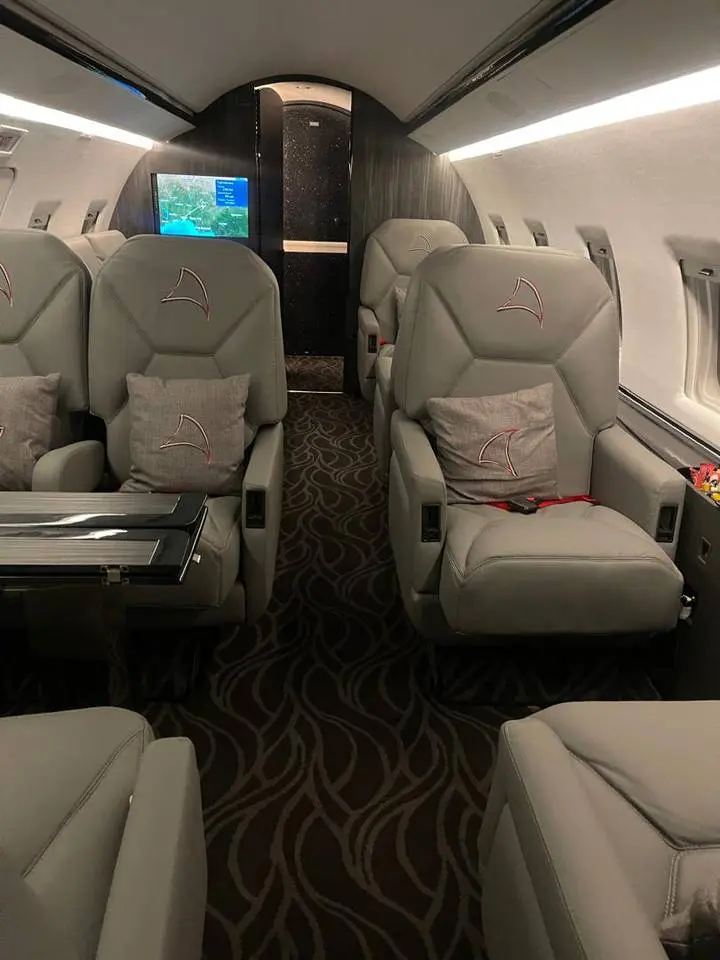
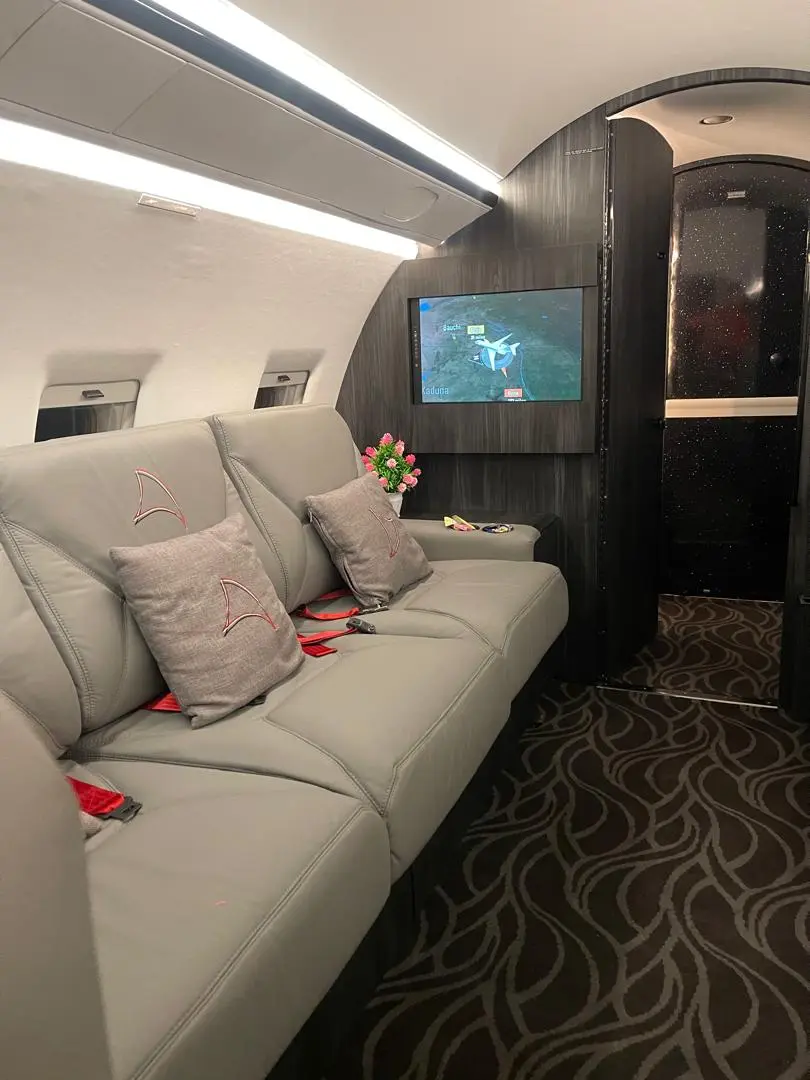

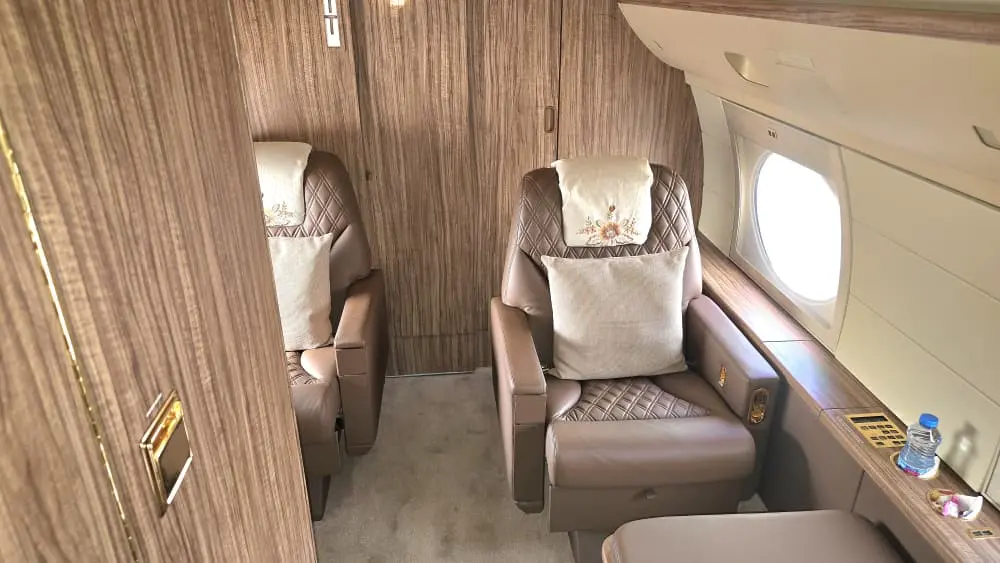
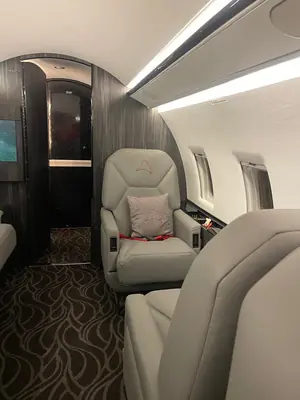






Satellite Wi-Fi is fitted on most aircraft in the fleet network, allowing you to work, take calls, or stay connected throughout the flight — genuinely useful for executives who treat flight time as working time rather than downtime. Cabin lighting on newer aircraft is designed to reduce fatigue on longer sectors, and dedicated crew are on hand throughout for catering and any onboard request.
We describe this deliberately without exaggeration: it is a comfortable, quiet, private working and resting environment — not a nightclub in the sky. That distinction matters to the executives and families who charter with us specifically because they want productivity and rest, not spectacle.
The Foundation of Every Flight
Safety and Regulatory Compliance

Safety is the single non-negotiable element of every Totripjet charter. All aircraft operated on our behalf are maintained to manufacturer and regulatory maintenance schedules, flown by experienced crews, and operated under Nigerian Civil Aviation Authority (NCAA) regulations and applicable ICAO international standards.
We do not claim perfect statistics or invented certifications. What we can state plainly: every operator in our network is fully licensed, every aircraft undergoes scheduled maintenance to regulatory standard, and every flight is planned with a formal pre-departure risk assessment covering weather, routing and aircraft performance.
- Experienced crews — pilots and cabin crew with proven operational records on the aircraft type flown
- Scheduled maintenance — every aircraft maintained to manufacturer and NCAA-mandated schedules
- Regulatory compliance — full adherence to NCAA and applicable ICAO standards
- Operational planning — a formal weather and route risk assessment before every departure
- Flight monitoring — every flight tracked from departure to arrival
- Passenger confidentiality — manifest and itinerary details are handled discreetly at every stage
If weather, mechanical readiness, or any operational factor falls short of our standard for a specific departure, the flight is delayed or an alternative aircraft is sourced. We would rather explain a short delay than compromise on the assessment that keeps every flight safe.
Every Detail, Arranged Before You Board
Where the Time Actually Goes
How Private Jet Charter Saves Time
The time savings of private jet charter are concrete, not abstract. On a typical commercial domestic trip, a passenger arrives 90 minutes early, queues for check-in and security, waits at the gate, and — on arrival — waits again for baggage. A charter passenger arrives at the FBO 30–45 minutes before departure, is screened privately, and boards directly. On the return leg, luggage is handed to you directly on the apron.
| Stage | Commercial Airline | Private Jet Charter |
|---|---|---|
| Arrival Before Departure | 90–120 minutes | 30–45 minutes |
| Security Screening | Shared queue | Private, at FBO |
| Departure Time | Fixed schedule | Set by your itinerary |
| Routing | Hub-based, may include layovers | Direct where possible |
| Baggage on Arrival | Carousel wait | Handed to you at the aircraft |
| Airport Options | Major commercial hubs only | Regional airstrips also available |
For an executive attending a same-day meeting in another city, that difference is often the deciding factor between making the trip work at all or declining it. A same-day Lagos–Abuja round trip, for instance, is genuinely difficult to complete on commercial schedules if the meeting overruns even slightly — a charter simply waits.

For Executives and Corporate Teams
Business Aviation
Corporate charter clients use private jets for reasons that go well beyond comfort. A confidential merger discussion, a multi-city investor roadshow, or a delegation visiting several operational sites in one day are all genuinely difficult — sometimes impossible — to complete on commercial schedules.
Onboard time also becomes usable time. Satellite Wi-Fi, a private cabin for calls, and the absence of interruption mean flight time can be treated as working time rather than dead time. For teams travelling together, the cabin doubles as a mobile meeting room — briefings can continue in the air exactly as they would in an office.
Confidentiality matters too. Sensitive discussions — legal, financial, or personnel-related — are not overheard by strangers in adjacent seats. For companies operating under NDAs or ahead of public announcements, that discretion has real commercial value.

For Families and Special Occasions
Leisure Travel
Not every charter is business-driven. Families travelling with young children, elderly relatives, or simply wanting a relaxed start to a holiday charter for the same reasons executives do — control over timing and privacy — with a different emphasis on comfort.
There is no strict baggage weight limit to negotiate, no tight connection to make with a stroller and three suitcases, and no risk of a missed connection turning a family holiday into an airport ordeal. For weekend escapes, milestone celebrations, or destination weddings, a charter also allows a group of family and friends to travel together on one aircraft rather than scattered across separate commercial bookings.
Totripjet regularly arranges leisure charters for exactly this reason: the trip becomes about the destination and the people travelling, not the logistics of getting there.
Discretion, Built In
Privacy

Privacy is one of the most cited — and least discussed in detail — reasons clients choose private jet charter. It operates on two levels: personal privacy and business confidentiality.
On the personal side, an exclusive cabin means no unfamiliar passengers, no risk of being recognised or photographed in a public terminal, and no shared armrest conversations with strangers. For public figures, this is often the primary reason for chartering at all. For private individuals, it is simply the comfort of travelling without an audience.
On the business side, private terminals mean arrivals and departures are not visible to the general public in the way a commercial gate is. Manifest and itinerary details are handled discreetly by our operations team and are not shared beyond what is operationally necessary. For government, diplomatic, and high-profile corporate travel, that discretion is frequently a hard requirement, not a preference.
Privacy also extends to the people travelling with you. Families who prefer not to have children photographed in public, executives negotiating a transaction that hasn't been announced, and individuals managing a personal or medical situation all rely on the same principle: what happens on and around the aircraft stays between the people who were actually there.
A Distinct Concern From Safety
Security

Security and safety are related but not identical. Safety concerns the aircraft and the flight itself — maintenance, crew competence, weather planning. Security concerns the passenger's exposure to risk on the ground: who has access to your itinerary, who can approach you at the airport, and how controlled the environment is before you board.
A private FBO terminal is a controlled-access facility. Unlike a commercial terminal, it is not open to the general public, which materially reduces the number of people with any opportunity to observe or approach a passenger. For clients travelling under a genuine security concern — government officials, diplomats, high-profile executives — Totripjet can also arrange dedicated close protection and secure ground transport as part of the charter, coordinated in advance with your own security detail where one exists.
Itinerary information is shared internally only with the operations staff directly involved in planning your flight. We do not publish, discuss, or confirm client travel details to third parties under any circumstances.

Beyond the Major Hubs
Airport Flexibility
Commercial airlines only serve airports large enough to support scheduled service at scale. Nigeria has dozens of airports and airstrips that see no commercial traffic at all but are perfectly capable of handling a turboprop or light jet — placing you closer to an oil & gas site, a state capital, or a rural destination than any commercial routing could.
This matters most for domestic charter, where the final leg of a journey by road can otherwise consume as much time as the flight itself. Landing closer to the actual destination — rather than the nearest city with a commercial airport — is frequently the single biggest time saving a charter provides, more than the flight itself.
For international travel, private terminals at major hubs also mean avoiding the general arrivals hall entirely, with customs and immigration handled in a dedicated, less congested area of the airport.
Behind the Scenes
How Flights Are Planned
Every charter, however simple it appears from the passenger's side, involves a structured planning process on ours.
- Scheduling — confirming departure and arrival timing against your itinerary, including any return leg
- Airport and FBO selection — identifying the most suitable departure and arrival points for the aircraft type, including regional options where relevant
- Weather assessment — reviewing forecast conditions along the planned route and at both airports
- Aircraft preparation — positioning the aircraft, completing pre-flight checks, and confirming crew readiness
- Operational coordination — filing the flight plan and, for international routes, securing overflight and landing permits
- Passenger requirements — confirming catering, ground transport, and any special requests in advance
This is largely invisible to you as the passenger — the point of the process is precisely that you should not need to think about it. You confirm your requirements once; our operations team manages the rest.
Getting Started
How to Book Private Jet Charter
Booking your private jet charter with Totripjet is managed entirely by our operations team from your first enquiry through to your arrival.
Request Your Quote — 24/7
Contact Totripjet via WhatsApp, phone, or email at any time with your route, dates, and passenger count.
Select Your Aircraft
Your coordinator presents available aircraft with configuration, capacity, flight time, and all-inclusive pricing.
Confirm Your Itinerary
Departure and arrival times, FBO details, and return timing are confirmed in writing.
Provide Passenger Information
Names and identification details are collected for the manifest, along with any special requirements.
Payment and Confirmation
On receipt of payment, Totripjet issues your formal charter confirmation with aircraft registration and timings.
Pre-Departure Coordination
Permits, catering, ground transport, and the final passenger manifest are all confirmed ahead of departure.
Departure
Arrive at your FBO at report time. Screening is private; you board directly to the aircraft on the apron.
Arrival
Your aircraft taxis to the private terminal. Bags are unloaded directly to you; ground transport is waiting.
See It For Yourself
Inside a Totripjet Charter
A short look at the cabin and onboard service you can expect on a Totripjet charter flight.
Understanding the Cost
Private Jet Charter Pricing Factors
Private jet charter pricing is never one-size-fits-all — it reflects the specifics of your trip. Rather than quote a fixed number, Totripjet provides a fully itemised, transparent quotation based on the following factors:
- Aircraft type — turboprops and light jets are the most cost-efficient; heavy and ultra-long-range aircraft cost more to operate
- Flight distance — longer sectors require more fuel and, on some routes, crew rest considerations
- Passenger numbers — larger groups may require a larger cabin
- Airport charges — landing, handling, and parking fees vary by airport
- Crew requirements — longer or multi-day trips may require additional crew or overnight positioning
- International permits — overflight and landing permits for cross-border routes
- Fuel prices — subject to market fluctuation
- Overnight positioning — where the aircraft must reposition before or after your trip
- Seasonal demand — pricing can vary at peak travel periods
Contact Totripjet directly for a personalised, fully itemised quotation with no hidden charges. Our team will recommend the most cost-effective aircraft for your exact requirements.

Optional Extras
Luxury Services
Every Totripjet charter can be tailored with additional services, arranged in advance:
- Gourmet catering and champagne service — personalised menus for any sector length
- Restaurant reservations and event access — arranged alongside your travel
- Hotel reservations — coordinated with your flight itinerary
- Chauffeur transfers — ground transport waiting on the apron at arrival
- Security arrangements — for high-profile or sensitive travel
- Medical support — coordination for clients with specific medical needs
- Pet travel arrangements — subject to aircraft and regulatory requirements
Why Fly With Totripjet
Why Fly With Totripjet
Totripjet is available around the clock, every day of the year, for private jet charter enquiries anywhere in the world. Our operations team responds immediately.
Arranged Within 1–2 Hours of Confirmed Booking
Common Questions
Frequently Asked Questions — Private Jet Charter
How much does private jet charter cost?
How quickly can a private jet be arranged?
Which aircraft is right for my trip?
Can I charter a private jet for a same-day trip?
Are empty leg flights available?
Can pets travel on a private jet charter?
Is Wi-Fi available on private jet charter flights?
What catering options are available?
Is private jet charter safer than commercial airlines?
How many passengers can travel on a private jet charter?
Can Totripjet arrange international private jet charter?
What is the check-in process for private jet charter?
What is the difference between domestic and international charter booking?
Can Totripjet arrange charter for a large group or delegation?
In Their Words
Client Reviews — Totripjet Private Jet Charter
Where We Fly
Our Most Popular Private Jet Charter Routes
Totripjet Private Jet Charter operates private jet charter across Nigeria, Africa, Europe, USA, and Asia. All routes available 24/7.
Explore Totripjet Private Jet Charter
Discover our other services, executive fleet, popular routes, and booking information. We provide luxury private aviation across Nigeria and worldwide.
Routes & Fleet
Book Private Jet Charter — Available 24/7
Totripjet is ready now. Our operations team is on standby around the clock every day of the year. Private jet charter arranged within 1–2 hours of confirmed booking for domestic departures, including all permits and FBO coordination. Fully itemised quotation. No hidden charges.