Lagos to Abuja — Private Jet Route Overview
Private jet charter from Lagos to Abuja covers 530 km in 55–75 minutes on your exact schedule — no check-in queues, no delays, no shared terminal. Depart EJC FBO Lagos. Arrive ABV EJC FBO Abuja. Direct, private, 24/7.
The Lagos–Abuja corridor is Nigeria's most congested and unreliable domestic route. Private jet charter from Lagos to Abuja is the only way to travel between these two cities on your exact schedule — departing from the Executive Jet Centre (EJC) at Lagos LOS and arriving at Nnamdi Azikiwe International Airport (ABV) in complete privacy, with zero delays and zero commercial queues.
This Is What Private Jet Charter Looks Like
From the moment you board at EJC FBO Lagos, every detail is yours — your schedule, your privacy, your cabin. Fly Lagos to Abuja in 55 minutes in a world that moves entirely at your pace.
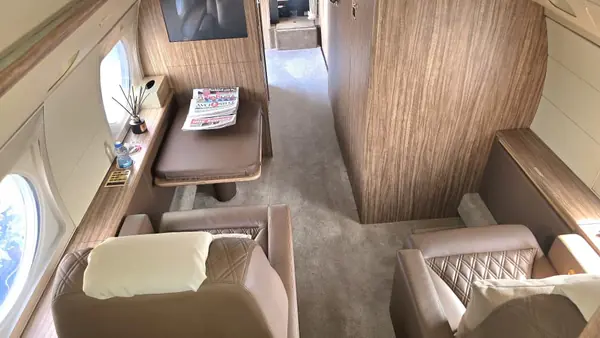
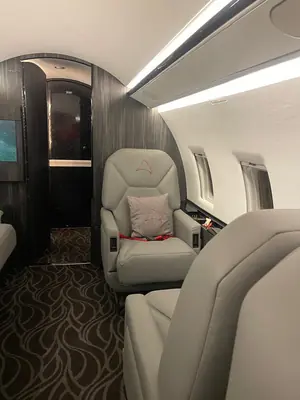
Experience the Cabin — Lagos to Abuja Private Jet
Step inside the aircraft. Every Totripjet Private Jet Charter flight features fully private executive cabins, attentive crew, and premium in-flight service from departure at EJC FBO Lagos to arrival at Abuja.







Route Details — Lagos (LOS) to Abuja (ABV) Private Jet Charter
| Route Parameter | Detail |
|---|---|
| Departure Airport | Murtala Muhammed International Airport (LOS / DNMM) — Executive Jet Centre (EJC) FBO, Ikeja, Lagos |
| Arrival Airport | Nnamdi Azikiwe International Airport (ABV / DNAA) — Abuja, Executive Jet Centre FBO and private aviation terminal |
| FBO Terminal | Executive Jet Centre (EJC) FBO, Nnamdi Azikiwe International Airport (ABV) — dedicated private aviation handling |
| Distance | 530 km / 329 miles / 286 nautical miles |
| Flight Time | 55 – 75 minutes non-stop (varies slightly by aircraft type) |
| Aircraft | Light and super-midsize jets — Cessna Citation XLS | Embraer Phenom 300 | Hawker 800XP | King Air 350 | Bombardier Challenger 300 |
| Passengers | Up to 8–11 depending on aircraft (Embraer Phenom 300: 8 | Cessna Citation XLS: 9 | Hawker 800XP: 9 | Bombardier Challenger 300: 10 | King Air 350: 11) |
| Departure Terminal | Executive Jet Centre (EJC) FBO — Murtala Muhammed International Airport (LOS), Ikeja |
| Check-In Time | Arrive 45 minutes before departure at EJC FBO, Lagos |
| Travel Documents | No visa required — valid Nigerian passport or national ID card for domestic travel |
| Advance Notice | NCAA domestic permit filed before departure — managed by your Totripjet Private Jet Charter coordinator |
| Availability | 24/7 — every day including weekends and public holidays |
| Empty Leg Savings | Up to 75% off — contact us for current Lagos–Abuja availability |
| Dispatch Time | 1–2 hours from confirmed booking including all domestic permits |
| Routing | Lagos → Direct domestic airspace → Abuja (ABV) |
| Cruise Altitude | 35,000 – 45,000 feet — above all domestic commercial traffic |
| Regulatory Body | Nigerian Civil Aviation Authority (NCAA) |
| FBO Operator | Executive Jet Centre (EJC) — Abuja ABV private aviation terminal |
| Cruise Speed | Mach 0.75–0.80 depending on aircraft type |
| Domestic Clearance | NCAA domestic arrival processing at ABV EJC FBO private terminal — separate from all commercial arrival halls |
| Fuel Type | Jet A1 at Lagos EJC FBO | Jet A1 at Abuja ABV FBO |
| Time Difference | No time difference — Lagos and Abuja share West Africa Time (WAT = GMT+1) |
| Non-Stop Capability | All listed aircraft — Citation XLS: Yes | Phenom 300: Yes | Hawker 800XP: Yes | King Air 350: Yes | Challenger 300: Yes |
| Fuel Stop Required | None — all aircraft complete Lagos–Abuja non-stop at full payload. 530 km is well within range of every listed aircraft |
| Delay Risk | Very Low — private FBO departures avoid commercial ATC slot dependency |
| Turboprop Flight Time | 60–80 minutes (King Air 350) |
| Flight Heading | 048° True |
| Airport Elevation | Lagos (LOS): 42 m (138 ft) ASL | Abuja (ABV): 342 m (1,122 ft) ASL |
| Longest Runway | Lagos (LOS): 3,900 m (12,795 ft) | Abuja (ABV): 3,600 m (11,811 ft) |
| Diversion Airfields | Ibadan (IBA / DNIB) — 114 km from Lagos | Ilorin (ILR / DNIL) — 244 km from Lagos | Kaduna (KAD / DNKA) — 165 km from Abuja | Jos (JOS / DNJO) — 190 km from Abuja |
| Official Sources | NCAA: ncaa.gov.ng | FAAN: faan.gov.ng | ICAO: icao.int |
Private Jet Charter From Lagos to Abuja: Nigeria's Federal Capital Corridor
The Lagos–Abuja corridor is Nigeria's most commercially active domestic aviation route — carrying a continuous flow of business executives, federal government officials, legislators, investors, lawyers, ministers, and policy influencers between West Africa's commercial engine and Nigeria's federal capital. Abuja controls all federal government contracts, regulatory approvals, legislative sessions, policy decisions, and ministerial engagements that drive Nigeria's economy. Every Nigerian CEO, banker, and entrepreneur with federal government relationships must maintain a regular Lagos–Abuja presence.
Despite the scale of this domestic traffic, commercial flights between Lagos and Abuja are among the most unreliable in Nigeria's aviation sector — suffering from chronic delays, overbooking, last-minute cancellations, and peak-hour congestion that regularly adds 3 to 5 hours to a journey that should take under 90 minutes. A Nigerian CEO scheduled for a ministerial meeting at Aso Villa at 09:00 on a Monday morning cannot operate on a commercial airline timeline that requires arriving at Murtala Muhammed Terminal at 05:30.
Private jet charter from Lagos to Abuja with Totripjet Private Jet Charter removes every constraint. Your dedicated executive aircraft departs from the Executive Jet Centre (EJC) FBO at Murtala Muhammed International Airport (LOS) on your confirmed schedule. You cover the 530 kilometres of Nigerian domestic airspace in 55 to 75 minutes. You arrive at Nnamdi Azikiwe International Airport (ABV) having worked, prepared, and arrived in peak condition for your most critical government and business engagements.
Clients chartering this route include:
- Nigerian Chief Executives and Corporate Boards — flying from Lagos to Abuja for federal regulatory meetings, ministry engagements, and government contract negotiations at Aso Rock and ministerial headquarters
- Real Estate Investors and HNW Buyers — travelling to Abuja to inspect and acquire property in Maitama, Asokoro, Wuse II, and Jabi — Abuja's federal capital status makes it one of Nigeria's most valuable real estate markets
- Legal and Professional Services Executives — flying to Abuja for Supreme Court hearings, Court of Appeal sessions, federal tribunal proceedings, and regulatory submissions at FIRS, CAC, NCC, and SEC
- Nigerian Government Officials and Delegates — travelling between Lagos and Abuja for National Assembly sessions, ministerial briefings, and federal executive council meetings
- Medical and Healthcare Executives — travelling to Abuja for NAFDAC, NHIS, and federal ministry of health engagements, or accessing specialist care at National Hospital Abuja and Nile Hospital
- High-Net-Worth Families — travelling from Victoria Island and Ikoyi Lagos residences to Maitama and Asokoro Abuja homes, avoiding the stress and exposure of commercial terminals
- Fashion, Entertainment, and Creative Industry Leaders — flying to Abuja for government meetings, policy engagements, and entertainment industry regulatory submissions at NBC and other federal agencies
- Banking and Finance Professionals — managing CBN regulatory meetings, AMCON engagements, and federal government banking relationships from Lagos to Abuja on the same business day
Abuja Private Aviation Airport — Nnamdi Azikiwe International (ABV)
Abuja is served by Nnamdi Azikiwe International Airport (ABV / DNAA), which handles all private jet arrivals from Lagos through its dedicated Executive Jet Centre (EJC) FBO terminal. Unlike commercial passengers processed through the congested main terminal, private jet charter clients arrive at the private FBO with dedicated passenger handling and ground transport directly on the apron.
Nnamdi Azikiwe International Airport (ABV / DNAA) — Executive Jet Centre FBO
| Detail | Information |
|---|---|
| IATA Code | ABV |
| ICAO Code | DNAA |
| Location | Abuja — approximately 35 km north of Abuja city centre, 20 km from Aso Rock |
| Runway | 3,600 m — handles all light jet, super-midsize, and turboprop private aircraft |
| Private Terminal | Executive Jet Centre (EJC) FBO — dedicated private aviation terminal with fast NCAA domestic passenger processing on arrival |
| Why Recommended | Dedicated private aviation FBO completely separate from the congested commercial terminal — the correct arrival point for all Lagos private jet clients seeking speed, privacy, and direct access |
| Best For | Aso Rock, Maitama, Asokoro, Wuse II, Central Business District, National Assembly, Federal Ministries |
Nnamdi Azikiwe International Airport ABV is Totripjet Private Jet Charter's arrival point for all Lagos to Abuja private jet charters. The Executive Jet Centre (EJC) FBO operates separately from the commercial terminal — NCAA domestic passenger processing is completed at the private FBO. Your vehicle is on the apron before you disembark. From ABV EJC to Aso Rock: 20 minutes. From ABV to Maitama: 25 minutes. From ABV to Wuse II: 30 minutes.
Abuja Ground Transport — Key Destinations from ABV EJC FBO
| Detail | Information |
|---|---|
| Aso Rock / Presidency | Approximately 20 minutes from ABV EJC FBO |
| Maitama (Ministers' Hill) | Approximately 25 minutes from ABV EJC FBO |
| Asokoro (Diplomatic Zone) | Approximately 25 minutes from ABV EJC FBO |
| National Assembly Complex | Approximately 20 minutes from ABV EJC FBO |
| Central Business District | Approximately 30 minutes from ABV EJC FBO |
| Wuse II (Commercial District) | Approximately 30 minutes from ABV EJC FBO |
All Totripjet Private Jet Charter Lagos–Abuja clients are met on the apron at the Executive Jet Centre (EJC) FBO with pre-arranged ground transport. Your coordinator confirms your Abuja ground transport requirements at the time of booking — executive vehicles, security-cleared drivers, and multi-vehicle delegation convoys all arranged as part of your charter package.
Your Totripjet Private Jet Charter coordinator will confirm your Abuja ground transport arrangements based on your destination — whether that is Aso Rock, Maitama, Asokoro, National Assembly, Wuse II, or National Hospital Abuja.
Aircraft for Lagos to Abuja — Executive Jets and Turboprops
The Lagos–Abuja sector covers just 286 nautical miles of Nigerian domestic airspace — one of the shortest possible private jet sectors. This means virtually every executive jet in the Totripjet Private Jet Charter fleet can operate this route comfortably, giving clients maximum flexibility on aircraft type, cabin size, and price point. The following aircraft are regularly operated on the Lagos to Abuja private jet charter route.
Because the sector is so short, aircraft selection on this route is driven less by range or speed and more by passenger count, luggage volume, and the nature of the trip. Our aviation team typically recommends sizing the cabin to the group rather than the distance: a solo executive or two-person team rarely benefits from a larger cabin on a 55–65 minute flight, while a 6–9 person delegation gains real value from the extra seating and stand-up cabin space of a mid-size or super-midsize jet. Luggage matters more on this corridor than many clients expect — delegations travelling with box files, equipment cases, or multiple bags per passenger are often better matched to the King Air 350 or Hawker 800XP, both of which carry meaningfully more baggage volume than the super-light category. As a general guide: choose a smaller jet when the priority is speed, privacy, and minimising cost for one to four passengers; choose a larger cabin when the priority is comfort for a full delegation, in-flight workspace, or carrying significant luggage or equipment.
Cessna Citation XLS / XLS+
Super-Light Jet — Most Popular Lagos–Abuja| Specification | Detail |
|---|---|
| Range | 2,100 nm — Lagos to Abuja completed in under 60 minutes with full payload |
| Passengers | Up to 9 passengers |
| Cabin | Stand-up cabin — comfortable club seating, dedicated galley, full lavatory, satellite Wi-Fi |
| Cruise Speed | Mach 0.75 — arrives Abuja in under 60 minutes from Lagos |
| Cruise Altitude | 45,000 feet — above all domestic commercial traffic |
| Why Choose | The most popular light jet for the Lagos–Abuja sector — proven reliability, excellent cabin comfort for the short crossing, and the most widely operated executive jet in Nigerian domestic private aviation |
The Cessna Citation XLS is the most popular and most frequently chartered aircraft on the Lagos–Abuja sector. Its stand-up cabin, reliable performance, and proven track record in Nigerian domestic aviation make it the first choice for individual executives, small delegation groups, and legal teams travelling between Lagos and Abuja. Ideal for: solo executives, 2-4 person business teams, legal professionals, and government clients requiring same-day Lagos–Abuja–Lagos return.
For a one-hour sector like this, the XLS's value lies in matching cabin size to need: it's large enough for confidential calls and document review in privacy, but compact enough to keep cost efficient for smaller groups. It is the right choice when the trip is a focused business engagement — a meeting, a court appearance, a single-day delegation — rather than when several colleagues each need their own workspace, in which case stepping up to the Hawker 800XP or Challenger 300 becomes the smarter decision.
Embraer Phenom 300
Light Jet — Speed and Efficiency| Specification | Detail |
|---|---|
| Range | 2,010 nm — Lagos to Abuja non-stop in approximately 55–65 minutes |
| Passengers | Up to 8 passengers |
| Cabin | Spacious light jet cabin — executive seating, full galley, dedicated lavatory, satellite Wi-Fi |
| Cruise Speed | Mach 0.78 — one of the fastest light jets on the Lagos–Abuja sector |
| Cruise Altitude | Up to 45,000 feet |
| Why Choose | The fastest and most technologically advanced light jet available on the Lagos–Abuja route — exceptional fuel efficiency and the most modern cabin in its class |
The Embraer Phenom 300 is one of the fastest light jets in the world and delivers an exceptional Lagos–Abuja crossing in under 65 minutes. Its modern cabin, advanced avionics, and proven Nigerian domestic operation record make it the premium light jet choice for executive travellers who prioritise speed and technology. Ideal for: individual executives, 2–6 person business teams, and legal professionals requiring maximum speed on the Lagos–Abuja sector.
On a sector this short, the time saved by the Phenom's higher cruise speed is modest in absolute terms, but it matters most when a client has back-to-back commitments on both ends of the trip — for example, a same-day return where every minute on the ground in Abuja counts. Pilots also favour this aircraft for its handling characteristics on shorter or less developed runways, which can be relevant if a client's itinerary extends beyond the main Abuja terminal to a regional strip.
Hawker 800XP
Mid-Size Jet — Best Value Group Travel| Specification | Detail |
|---|---|
| Range | 2,800 nm — Lagos to Abuja non-stop with extensive reserve |
| Passengers | Up to 8–9 passengers |
| Cabin | Stand-up mid-size cabin — full galley, enclosed lavatory, comfortable club seating, satellite Wi-Fi |
| Cruise Speed | Mach 0.80 |
| Why Choose | One of the most established mid-size jets in Nigerian domestic private aviation — proven reliability, excellent cabin space for delegation groups, and outstanding value for the Lagos–Abuja sector |
The Hawker 800XP is the most established and trusted mid-size jet in Nigerian domestic private aviation. Its proven reliability, excellent cabin space, and strong performance on the short Lagos–Abuja sector make it the preferred choice for corporate delegation groups of 5–9 passengers, ministerial travel teams, and legal teams requiring a full cabin for the crossing.
This is the point on the corridor where group size, not flight time, starts to drive aircraft choice. Once a delegation grows past four or five passengers, the cabin volume and luggage capacity of the Hawker become more important than the marginal speed advantage of a smaller jet — there is simply more room to work, spread out documents, and carry the bags and equipment a delegation of this size typically brings. It is the practical, value-oriented step up from the super-light category whenever the group, not the distance, is the deciding factor.
King Air 350 / 350i
Turboprop — Group Travel and Cargo| Specification | Detail |
|---|---|
| Range | 1,800 nm — Lagos to Abuja comfortably non-stop |
| Passengers | Up to 11 passengers |
| Cabin | Stand-up pressurised turboprop cabin — club seating, galley, lavatory, cargo flexibility |
| Cruise Speed | 580 km/h — approx 60–75 minutes Lagos to Abuja |
| Why Choose | The ideal aircraft for larger delegation groups on the short Lagos–Abuja sector, or clients requiring both passenger and cargo capacity in a single flight. The King Air 350 is widely operated in Nigerian domestic aviation |
The King Air 350 earns its place on this route through cabin volume and payload flexibility rather than speed. Its turboprop powerplant is less efficient at higher cruise levels than a jet, which is one reason it sits slightly behind the jets on this list for time-sensitive single-day round trips — but for an 11-passenger group, or a charter that combines passengers with cargo such as samples, documents, or equipment, it offers more usable space per naira than any jet in this category. Ideal for: larger delegations of 9–11 passengers, mixed passenger-and-cargo charters, and groups where total seating capacity matters more than marginal flight-time savings on this short sector.
Bombardier Challenger 300 / 350
Super-Midsize — Premium Group Charter| Specification | Detail |
|---|---|
| Range | 3,200 nm — Lagos to Abuja non-stop with full payload and substantial reserve |
| Passengers | Up to 10 passengers |
| Cabin | Stand-up super-midsize cabin — full galley, enclosed lavatory, flat-floor executive seating, satellite Wi-Fi, exceptional cabin quietness |
| Note | No fuel stop required — Lagos to Abuja is well within Challenger 300 range at all payload configurations |
| Why Choose | The most premium super-midsize option for the Lagos–Abuja sector — the correct aircraft for senior government delegations, board-level corporate groups, and clients requiring the highest standard of cabin comfort on the domestic corridor |
Upgrading to the Challenger 300 on a sector this short is rarely about needing the extra range — it is about cabin standard. The flat-floor cabin, larger windows, and superior sound insulation make a genuine difference when the passengers are senior decision-makers who will use the flight time for sensitive discussions or final preparation before a meeting. Ideal for: board-level delegations, senior government parties, and any group of up to 10 where the quality of the in-flight environment is as important as the destination. For most individual travellers or small teams, this level of cabin is more aircraft than the route requires — the smarter choice in that case is one of the lighter jets above.
Complete Flight Details — Lagos (LOS) to Abuja (ABV)
| Detail | Information |
|---|---|
| Route | Lagos LOS (DNMM) → Nnamdi Azikiwe ABV (DNAA) — Executive Jet Centre (EJC) FBO, Abuja |
| Distance | 530 km / 329 miles / 286 nautical miles |
| Flight Time | 55 – 75 minutes non-stop (no fuel stop required on any listed aircraft) |
| Routing | Lagos → Nigerian domestic airspace → Abuja (ABV) |
| Departure Terminal | Executive Jet Centre (EJC) FBO — Murtala Muhammed International Airport (LOS), Ikeja, Lagos |
| Arrival | Nnamdi Azikiwe International Airport (ABV) — Executive Jet Centre (EJC) FBO, Abuja |
| Aircraft | Cessna Citation XLS | Embraer Phenom 300 | Hawker 800XP | King Air 350 | Bombardier Challenger 300 |
| Passengers | Up to 8–19 depending on aircraft configuration |
| Cruise Altitude | 35,000 – 45,000 feet — above all domestic commercial traffic |
| Cruise Speed | Mach 0.75–0.80 depending on aircraft type |
| Check-In Time | Arrive 45 minutes before departure at EJC FBO, Lagos LOS |
| Travel Documents | No visa required — valid Nigerian passport or national ID for domestic travel |
| Permits | All Nigerian NCAA domestic overflight and landing permits secured by your Totripjet Private Jet Charter coordinator |
| Domestic Clearance | NCAA domestic arrival processing at ABV EJC FBO private terminal — separate from all commercial arrival halls |
| Availability | 24/7 — every day including weekends and all Nigerian public holidays |
| Fuel Type | Jet A1 at Lagos EJC FBO | Jet A1 at Abuja ABV FBO |
| Time Difference | No time difference — Lagos and Abuja share West Africa Time (WAT = GMT+1) |
| Empty Leg Savings | Up to 75% off — contact us for current Lagos–Abuja empty leg availability |
Private Jet Flight Experience — Lagos to Abuja
The Lagos to Abuja crossing is a 55 to 75 minute direct domestic flight — the shortest premium private jet sector in Nigerian aviation. Every Totripjet Private Jet Charter Lagos–Abuja charter delivers a seamless, efficient, and fully private executive experience from EJC FBO Lagos to EJC FBO Abuja.
- EJC FBO Lagos — Private Terminal Departure: arrive 45 minutes before your confirmed departure time at the Executive Jet Centre (EJC) FBO, Murtala Muhammed International Airport (LOS). Private security screening and passenger processing are completed entirely within the EJC — no commercial terminal contact, no commercial queues. Direct boarding from the EJC private lounge to your aircraft on the apron.
- High-Altitude Domestic Performance: your aircraft climbs to 35,000–45,000 feet above all Nigerian domestic commercial traffic. The crossing is smooth, fast, and unaffected by the ground-level delays and congestion that characterise commercial Lagos–Abuja services.
- In-Flight Productivity: the 55–75 minute Lagos–Abuja crossing is the perfect working window — prepare briefings, conduct calls, review documents, or simply rest before your Abuja meetings, entirely in private.
- Light Catering Service: all Lagos–Abuja charter flights include a personalised light catering service — fresh refreshments, premium beverages, breakfast or lunch platters, and specialist dietary requirements all arranged before departure from EJC FBO Lagos.
- High-Speed Satellite Wi-Fi: continuous broadband internet connection across the short Lagos–Abuja sector. Prepare presentations, conduct calls, and arrive in Abuja fully current and completely ready for your first engagement.
- 100% Private Aircraft: your aircraft carries your party exclusively. No other passengers share the flight. Every conversation, document, and discussion between Lagos and Abuja remains entirely confidential — the highest-security domestic travel environment in Nigeria.
- Dedicated Cabin Crew: professionally trained and fully briefed on your preferences, dietary requirements, and service expectations for the Lagos–Abuja flight.
- Abuja FBO Arrival: touch down at Nnamdi Azikiwe International (ABV) Executive Jet Centre FBO. NCAA domestic clearance processed at the private terminal — your vehicle is on the apron. From ABV to Aso Rock: 20 minutes. From ABV to Maitama: 25 minutes. From ABV to National Assembly: 20 minutes.
- Single Dedicated Coordinator: your Totripjet Private Jet Charter coordinator manages every detail from first contact through arrival in Abuja and return planning — permits, catering, ground transport, and same-day return flights all handled in full.
Flight Performance Summary — Lagos LOS to Abuja ABV
| Performance Parameter | Data |
|---|---|
| Departure Airport | Murtala Muhammed International Airport (LOS / DNMM) — Executive Jet Centre (EJC) FBO, Ikeja, Lagos |
| Arrival Airport | Nnamdi Azikiwe International Airport (ABV / DNAA) — Executive Jet Centre (EJC) FBO, Abuja |
| Distance | 530 km / 329 miles / 286 nautical miles |
| Flight Time Range | 55 – 75 minutes non-stop (all listed aircraft — no fuel stop required) |
| Cruise Altitude | 35,000 – 45,000 feet — above all Nigerian domestic commercial traffic |
| Cruise Speed | Mach 0.75–0.80 depending on aircraft type |
| Aircraft Required | Cessna Citation XLS | Embraer Phenom 300 | Hawker 800XP | King Air 350 | Bombardier Challenger 300 |
| Non-Stop Capability | All listed aircraft — Citation XLS: Yes | Phenom 300: Yes | Hawker 800XP: Yes | King Air 350: Yes | Challenger 300: Yes |
| Fuel Stop Required | None — all aircraft complete Lagos–Abuja non-stop at full payload. 530 km is well within range of every listed aircraft |
| Routing | Lagos LOS → Direct Nigerian domestic airspace → Abuja ABV |
| Overflight Permits Required | Nigerian Civil Aviation Authority (NCAA) domestic permit — secured by your Totripjet coordinator before departure |
| Delay Risk | Very Low — private FBO departures avoid commercial ATC slot dependency |
| Lagos Departure Timezone | WAT (GMT +1) |
| Abuja Arrival Timezone | WAT (GMT +1) |
| Time Difference | No time difference — both cities on WAT (GMT +1) |
| Fuel Type | Jet A1 at Lagos EJC FBO | Jet A1 at Abuja ABV EJC FBO |
| Nigerian Regulatory Body | Nigerian Civil Aviation Authority (NCAA) — ncaa.gov.ng |
| FBO Operator | Executive Jet Centre (EJC) — Abuja ABV private aviation terminal |
| International Standards | ICAO — icao.int |
Booking Availability — Private Jet Charter Lagos to Abuja
| Service Type | Availability |
|---|---|
| One-Way | ✅ Available — Lagos LOS to Abuja ABV at any time |
| Return | ✅ Available — full round-trip coordination Lagos–Abuja–Lagos, including same-day return |
| Multi-Leg Domestic Itineraries | ✅ Available — Abuja plus Port Harcourt, Kano, Enugu, Calabar, or other Nigerian domestic connections |
| Emergency / Urgent Charter | ✅ Available — urgent Lagos to Abuja charter arranged within 1–2 hours including all NCAA permits |
| Dispatch Time | 1–2 hours from confirmed booking including all NCAA domestic permits |
| Empty Leg Flights | ✅ Frequently available — up to 75% off Lagos–Abuja charter rate |
| Booking Hours | 24/7 — every day including weekends and all Nigerian public holidays |
| Quote Response | Within 1 minute, 24/7 |
| Permit Management | All NCAA domestic overflight and landing permits for Nigeria managed by your Totripjet coordinator |
| Abuja FBO Arrival Coordination | EJC FBO ABV ground handling coordinated — vehicle on apron, NCAA domestic clearance at private terminal |
| Medical Travel Support | Full ground transport coordination from ABV to National Hospital Abuja, Nile Hospital, Cedarcrest, and other Abuja medical facilities |
Lagos–Abuja Empty Leg Flights — Save Up To 75%
Totripjet Private Jet Charter regularly releases empty leg flights on the Lagos–Abuja sector — one of Nigeria's most active domestic private jet routes. Save up to 75% on charter rates when schedules align. Lagos–Abuja empty leg availability changes rapidly — contact us immediately for current availability.
💬 WhatsApp for Empty Leg AvailabilityLagos — Pre-Departure Planning for Your Abuja Journey
For travellers departing Lagos on the private jet to Abuja, the following Lagos addresses connect directly to the Executive Jet Centre (EJC) FBO departure experience at Murtala Muhammed International Airport (LOS).
Preferred Pre-Departure Hotels in Lagos
- Eko Hotel and Suites — Victoria Island — Lagos's most iconic five-star hotel. The premier pre-departure base for Abuja-bound private jet travellers
- Federal Palace Hotel — Victoria Island — historic Atlantic waterfront luxury appropriate for the evening before an Abuja departure
- Radisson Blu Anchorage — Victoria Island — premium waterfront positioning popular with government and executive travellers
- The George Lagos — Ikoyi — boutique luxury in Lagos's most prestigious residential district
- Sheraton Lagos Hotel — Ikeja GRA — minutes from EJC FBO — the most strategically positioned pre-departure hotel for Lagos LOS private jet travellers
Lagos Pre-Departure Fine Dining
- Cactus Restaurant — Victoria Island — Lagos's premier fine dining address for pre-Abuja departure evenings
- NOK by Alara — Victoria Island — award-winning Pan-African cuisine for Nigerian fashion and creative executives travelling to Abuja
- RSVP Restaurant — Lekki — sophisticated pre-departure dining for corporate executives heading to Abuja government and business meetings
- Talindo Steak House — Victoria Island — the ultimate pre-Abuja departure dinner for Nigerian CEOs
Abuja — Arrival Planning for Lagos Private Jet Clients
Arriving at Nnamdi Azikiwe International Airport (ABV) by private jet from Lagos, Abuja offers immediate access to Nigeria's seat of federal power, government ministries, the National Assembly, and a growing luxury hospitality and real estate market. The following recommendations are selected specifically for Lagos private jet charter clients arriving in Abuja.
Premier Abuja Hotels
- Transcorp Hilton Abuja — Nigeria's most prestigious hotel — the definitive Abuja address for CEOs, ministers, and ultra-high-net-worth arrivals from Lagos. Located in the heart of the Central Business District
- Sheraton Abuja Hotel — premium international brand hotel in the Central Business District — preferred by corporate executives and government delegation groups from Lagos
- Nicon Luxury Hotel — Abuja's premier indigenous luxury hotel in Maitama — preferred by Nigerian HNW individuals and government officials requiring complete privacy
- Radisson Blu Anchorage Hotel Abuja — premium international hotel in the Central Business District — ideal base for federal ministry and regulatory meetings from Lagos
- The Bolton Hotel Abuja — boutique luxury hotel in Wuse II — preferred by Lagos executives requiring a discreet, high-quality base in Abuja's commercial district
- Agura Hotel Abuja — established luxury hotel in the Central Business District — the preferred address for Nigerian business delegations requiring a reliable, well-connected Abuja base
Key Abuja Destinations for Lagos Private Jet Clients
- Aso Rock Villa (Presidency) — Nigeria's seat of federal executive power — the primary destination for government relations executives, ministers, and delegation groups from Lagos
- National Assembly Complex, Three Arms Zone — Nigeria's legislative seat — primary destination for lobbyists, legal professionals, and policy executives from Lagos
- Federal Secretariat and Ministries, CBD — location of all federal ministries — primary destination for regulatory submissions, ministerial meetings, and government contract engagements
- Central Bank of Nigeria (CBN) Headquarters, Garki — primary destination for Nigerian banking and finance executives from Lagos requiring CBN regulatory meetings
- National Hospital Abuja, Central Business District — Nigeria's premier federal government hospital — destination for medical clients and health sector executives from Lagos
- Abuja Arts and Crafts Village, Area 10 — Nigeria's premier arts and crafts market — destination for collectors and cultural visitors from Lagos
Abuja Medical Facilities
- National Hospital Abuja — Nigeria's premier federal medical institution — located in the Central Business District, serving government officials and HNW clients
- Nile Hospital Abuja, Asokoro — one of Abuja's most respected private hospitals — preferred by HNW clients and executives requiring discreet medical care
- Cedarcrest Hospitals Abuja, Jabi — premium private hospital in Jabi — providing specialist care across multiple disciplines for Lagos medical travel clients
- Garki Hospital Abuja — established federal government hospital in Garki — comprehensive specialist care in central Abuja for federal health service clients
Abuja Fine Dining
- Signatures Restaurant, Transcorp Hilton — Abuja's most prestigious fine dining venue — the definitive power dinner address for Lagos executives in Abuja
- Cedar Restaurant, Sheraton Abuja — premium international dining in the Central Business District — the correct address for Lagos executives conducting meetings in Abuja's government district
- Wakkis Restaurant, Maitama — Abuja's most established fine dining and corporate entertaining venue — essential for Lagos executives hosting Abuja business dinners
- The Nest Restaurant, Abuja — one of Abuja's most acclaimed contemporary dining venues — a top choice for Lagos VIP visitors seeking exceptional food and atmosphere in the capital
Client Reviews — Totripjet Private Jet Charter
Reviews sourced directly from our Google Business Profile. We do not edit or fabricate any review.
Why Fly Totripjet — Trusted Lagos to Abuja Private Jet Charter
Totripjet Private Jet Charter is available around the clock, every day of the year for Lagos to Abuja private jet charter enquiries. Our domestic operations team responds immediately.
Frequently Asked Questions — Private Jet Charter Lagos to Abuja
How much does private jet charter from Lagos to Abuja cost?
How long is the flight from Lagos to Abuja by private jet?
Which airport does the private jet arrive at in Abuja from Lagos?
Do I need special documents for private jet charter from Lagos to Abuja?
Which aircraft are used for Lagos to Abuja private jet charter?
How quickly can a private jet from Lagos to Abuja be arranged?
Are empty leg flights available on the Lagos to Abuja route?
What catering is available on the Lagos to Abuja private jet flight?
Can Totripjet Private Jet Charter arrange onward connections from Abuja?
Can Totripjet Private Jet Charter arrange the return journey from Abuja to Lagos?
Is private jet travel from Lagos to Abuja safer than commercial airlines?
What is the check-in process for a private jet from Lagos to Abuja?
Can I charter a private jet from Abuja to Lagos instead?
How many passengers can travel on a private jet from Lagos to Abuja?
Does the private jet from Lagos to Abuja have Wi-Fi?
Who Uses Private Jet Charter From Lagos to Abuja
The Lagos–Abuja corridor is Nigeria's most commercially and politically important domestic route. The clients who charter it are not travelling for leisure — they are people for whom time, privacy, and control of their schedule directly determine the outcome of their day. The following profiles represent the principal users of private jet charter between Lagos and Abuja.
- Chief Executives and Managing Directors: Nigerian CEOs flying from Lagos headquarters to Abuja for federal regulatory meetings, ministerial engagements, and government contract negotiations require the 55-minute crossing — not a 4-hour commercial ordeal. When a CEO lands at Abuja EJC FBO, their vehicle is already on the apron. They walk off the aircraft and into their first meeting. No queues. No delays. No exposure.
- Government Officials and Ministers: ministers, commissioners, and senior federal officials operating between Lagos and the seat of government in Abuja require a level of security, discretion, and scheduling precision that no commercial airline can provide. Private jet charter allows government officials to travel without public visibility, manage sensitive schedules, and arrive at the Presidential Villa, Three Arms Zone, or ministry headquarters in full command of their time.
- Members of the National Assembly: senators and House of Representatives members based in Lagos or with Lagos-based offices need to be present in Abuja for plenary sessions, committee sittings, and legislative business. Commercial flights on this route are chronically delayed — a missed session or late arrival has political consequences. Private jet charter removes scheduling risk entirely.
- Diplomats and Foreign Government Representatives: foreign diplomats accredited to Nigeria who are based in Lagos or visiting Lagos regularly travel to Abuja where the Presidential Villa, Aso Rock, and all foreign embassies are located. Diplomatic travel on commercial airlines raises security and protocol concerns that private charter resolves completely.
- Oil and Gas Executives: senior executives from the international oil companies, NNPC officials, and independent petroleum operators shuttle between Lagos — where the commercial and financial operations are headquartered — and Abuja, where DPR/NUPRC regulatory approvals, ministry engagements, and government partnerships are managed. This is a genuinely time-critical professional route where every hour counts.
- Banking and Finance Executives: commercial bank MDs and DMDs, investment banking leaders, and senior finance professionals travel to Abuja for CBN regulatory meetings, AMCON engagements, FIRS tax obligations, and federal government banking mandates. The ability to depart Lagos at a precise time and be seated in a Maitama meeting room 90 minutes later is operationally decisive on this sector.
- Legal Professionals: senior counsel, senior advocates, and law firm partners appearing before the Supreme Court of Nigeria, Court of Appeal, federal tribunals, or regulatory bodies such as NCC, NAFDAC, and CAC in Abuja require certainty of arrival. A flight delay that causes a counsel to miss a Supreme Court sitting is a professional catastrophe. Private jet charter provides the reliability that the schedule demands.
- Corporate Boards and Executive Teams: when a full corporate board needs to travel together from Lagos to Abuja for a government presentation, bilateral negotiation, or regulatory approval hearing, private jet charter provides a single aircraft that carries the full team — allowing pre-meeting briefings, strategy discussions, and document review to continue in a completely private environment throughout the flight.
- Real Estate and Property Developers: Abuja's premium residential districts — Maitama, Asokoro, Wuse II, and Jabi — hold some of Nigeria's highest-value real estate. Lagos-based property developers, investors, and HNW buyers acquiring Abuja real estate regularly charter the Lagos–Abuja route to inspect developments, complete transactions, and manage relationships with federal land title authorities.
- Medical Travellers and Accompanying Families: patients travelling to National Hospital Abuja, Nile University Hospital, Maitama District Hospital, and other leading Abuja medical institutions require the most comfortable, least stressful travel environment available. Private jet charter on this short sector eliminates terminal stress, crowding, and delay — critical for patients travelling for serious medical care and equally important for the families accompanying them.
- Entertainment Personalities and Public Figures: musicians, actors, media personalities, and sports figures who are publicly recognisable cannot travel through commercial terminals without security risk, exposure, and disruption to both themselves and other passengers. Private jet charter from Lagos to Abuja provides the anonymity and security that high-profile individuals require as a basic operational necessity.
- High-Net-Worth Families and Private Individuals: Lagos families with homes, properties, investments, and family relationships in Abuja travel the corridor for personal, social, and business purposes. Travelling by private jet from their Victoria Island, Ikoyi, or Lekki residence directly to their Maitama or Asokoro home — with no commercial terminal exposure at any point — is a qualitative experience that cannot be compared to any commercial Lagos–Abuja flight.
- Foreign Investors and International Business Delegations: international investors visiting Nigeria for the first time or returning for further due diligence frequently fly into Lagos and need to continue to Abuja for government-level meetings. The Lagos–Abuja private jet crossing is often the first domestic Nigerian aviation experience for foreign delegates, and the quality and efficiency of that experience sets the tone for the entire Nigeria relationship.
Private Jet vs Commercial Flights: Lagos to Abuja
For travellers weighing their options on the Lagos–Abuja corridor, the distinction between private jet charter and commercial aviation goes far beyond price. On a route this commercially important — where executives, government officials, and high-net-worth individuals measure outcomes in hours, not days — the two travel modes operate in fundamentally different categories. The table below presents an honest, side-by-side comparison across every dimension that matters to a serious business traveller.
| Feature | Private Jet Charter | Commercial Airline |
|---|---|---|
| Total Travel Time | 90–120 minutes door to door, including 45-minute EJC arrival and 15-minute Abuja FBO clearance | 3.5–5+ hours including check-in, security queuing, boarding, taxi time, and baggage collection at ABV |
| Cost per Passenger (group of 8) | Approximately $688–$1,563, based on a group of 8 sharing a charter priced from $5,500 (King Air 350) to $12,500 (Challenger 300) | $200–$400 typical business-class fare |
| Recommended Airport Arrival Time | 45 minutes before departure at EJC FBO — no earlier arrival necessary | 2 hours before departure at LOS domestic terminal — earlier during peak travel periods |
| Check-in Process | No public check-in. Your Totripjet coordinator manages all documentation privately at the EJC FBO | Standard commercial check-in counter or self-service kiosk; queue times unpredictable at busy LOS periods |
| Security Screening | Private, expedited screening within the Executive Jet Centre — completed in under 10 minutes | Full commercial security queue shared with all domestic passengers; delays common at LOS domestic terminal |
| Boarding Experience | Escorted directly from EJC VIP lounge to aircraft on the apron — no gates, no queues, no announcements | Gate boarding with general passenger queue; overhead bin competition; frequent boarding delays |
| Flight Schedule Flexibility | Depart when you are ready — departure time set by you, adjusted by you, available 24 hours a day, 7 days a week | Fixed commercial timetable; limited daily frequencies; no adjustment possible once booked without rebooking fees |
| Privacy | Complete — your aircraft, your party, your cabin, no other passengers under any circumstances | None — shared cabin with up to 180+ passengers; business class rows remain open to neighbouring seats |
| Cabin Comfort | Club seating with full recline, near-stand-up headroom on Citation XLS and Challenger 300, quiet cabin environment throughout | Economy or business class seating; cabin noise levels from engines and passengers throughout the 55-minute crossing |
| Productivity During Flight | Full working environment — satellite Wi-Fi, document review, private telephone calls, onboard team briefings in a completely confidential setting | Limited — cabin noise, shared rows, and lack of privacy restrict serious work; connectivity unreliable on domestic sectors |
| Baggage Flexibility | No baggage restrictions on standard executive luggage; special items, equipment, and oversized pieces accommodated with advance notice | Checked and carry-on baggage allowances strictly enforced; excess baggage fees apply; no flexibility for unusual items |
| Ability to Change Departure Time | Departure time adjusted by direct communication with your Totripjet coordinator — same-day changes and short-notice adjustments handled routinely | Rebooking fees apply; same-day changes dependent on seat availability; standby options uncertain at LOS domestic |
| Airport Crowds | None — EJC FBO is a private facility entirely separate from all LOS commercial terminal buildings and public concourses | LOS and ABV domestic terminals among the busiest in West Africa; significant passenger volumes throughout the day |
| Business Meeting Capability | Aircraft cabin serves as a private boardroom — confidential strategy discussions, document signings, and pre-meeting briefings conducted fully in the air | Not practical — proximity to other passengers prevents confidential conversations; no working surface configuration possible |
| Ground Transportation Coordination | Vehicle arranged to meet aircraft directly on Abuja FBO apron — your driver is cleared to the aircraft steps before you land | Vehicle collection from ABV kerb after baggage hall clearance — delays in baggage and terminal exit routine on this route |
| Overall Passenger Experience | Premium executive aviation — the entire journey serves your schedule, your privacy, and your productivity from departure to destination | Standard commercial travel — schedule, process, and cabin experience designed for mass passenger volumes, not executive requirements |
*Cost per passenger based on a group of 8 sharing a charter priced from $5,500 (King Air 350) to $12,500 (Challenger 300). Commercial prices are approximate and vary by airline and booking date.
The Lagos–Abuja route is the most commercially consequential domestic air corridor in West Africa. It connects Nigeria's economic capital to the seat of federal government — a combination that generates a uniquely time-sensitive class of travellers: chief executives en route to ministerial engagements, senior counsel appearing before federal courts, oil and gas operators attending DPR hearings, and government officials managing schedules that no commercial timetable can accommodate. For these travellers, private jet charter on this route is not an indulgence — it is an operational decision driven by the same logic that informs every high-value business investment.
The private terminal advantage is the factor most consistently underestimated by travellers considering charter aviation for the first time. Departing from the Executive Jet Centre FBO at Murtala Muhammed International Airport means no contact with any commercial terminal structure at Lagos. No public check-in counters. No shared security queues. No boarding gates or departure halls. You arrive at a private facility, pass through private security in under ten minutes, and are escorted directly to your aircraft. At the Abuja end, arrival at the EJC FBO is equally fast — from wheels-down to vehicle departure in under fifteen minutes. The total airport processing time for a private jet charter on the Lagos–Abuja route is typically under thirty minutes across both ends of the journey. A commercial passenger on the same sector will spend more time than that in the LOS departure queue alone.
Flexible departure times are among the most operationally significant advantages of business aviation on this sector. The Lagos–Abuja corridor is notorious for commercial flight delays — a consequence of high slot demand, ground handling constraints, and the operational complexity of managing one of Africa's busiest domestic routes. When a commercial flight is delayed by ninety minutes, a minister misses a cabinet committee sitting, a CEO arrives for a negotiation having lost preparation time, and a legal counsel risks a missed court appearance. Charter aviation eliminates this risk entirely. Your Totripjet charter departs when you are confirmed and ready — and if your Lagos meeting runs late, your departure time adjusts accordingly. VIP travel on this corridor depends on precisely this kind of schedule control.
The productivity and privacy dimensions of executive travel on the Lagos–Abuja route deserve equal weight. The 55–75 minute crossing in a private jet cabin is a structured working period — board papers reviewed, presentations finalised, strategy aligned between team members, sensitive calls completed in full confidence. Executives who regularly fly this route by private charter consistently report that they arrive in Abuja better prepared and less fatigued than colleagues who take the commercial option. When the purpose of the Abuja visit is a high-stakes government negotiation, a regulatory submission, or a federal court appearance, that preparation advantage is directly material to the outcome.
Same-day return trips represent one of the highest-value use cases for private jet charter on the Lagos–Abuja corridor. A chief executive who needs to be present in both Lagos and Abuja on the same working day cannot rely on commercial aviation — the combination of fixed timetables, potential delays, and terminal processing time makes same-day return trips commercially impractical on most days of the week. By charter, a same-day Lagos–Abuja–Lagos itinerary is a standard booking: depart Lagos at 7 AM, complete Abuja meetings through to 3 PM, return to Lagos by 5 PM with the full working day intact on both ends. Government officials managing Abuja and Lagos commitments simultaneously, investment bankers closing time-sensitive transactions, and healthcare professionals managing dual-city patient commitments all depend on this operational model. Totripjet Private Jet Charter is available 24 hours a day, 7 days a week specifically to serve the schedule that serious work on this corridor demands.
Time saved per Lagos–Abuja trip: 2 to 4 hours minimum. For a Nigerian executive making ten to twenty Lagos–Abuja round trips per year, private jet charter with Totripjet Private Jet Charter recovers approximately 20 to 80 hours annually — delivered in complete privacy, security, and comfort that no commercial Lagos–Abuja routing can approach.
- Commercial Lagos–Abuja flights are among Nigeria's most delayed routes — private jet eliminates all delay risk
- Non-stop crossing — 55 to 75 minutes Lagos to Abuja with zero connections or delays
- Arrive Abuja in peak condition — prepared, composed, and in position for an immediate meeting or government engagement
- Arrive at ABV EJC FBO — private terminal, vehicle on apron, 20 minutes to Aso Rock
- Complete security throughout — no public exposure at any point between Lagos and Abuja
What Your Lagos to Abuja Private Jet Flight Experience Looks Like
From the moment you arrive at the Executive Jet Centre in Lagos to the moment your vehicle pulls away from the Abuja FBO apron, every element of your Lagos–Abuja private jet charter is arranged, managed, and executed by your dedicated Totripjet coordinator. This is what the journey looks like.
- Arrival at Lagos Executive Jet Centre (EJC) FBO: you arrive at the Executive Jet Centre private terminal at Murtala Muhammed International Airport (LOS), Ikeja, 45 minutes before your confirmed departure. The EJC is entirely separate from all commercial terminal buildings. There are no public queues, no check-in counters, and no shared processing areas of any kind. Your coordinator and a dedicated handling agent meet you at the vehicle entrance.
- Private Lounge Access: from arrival you are escorted directly into the EJC VIP lounge — a quiet, private, air-conditioned space completely removed from any commercial airport environment. Refreshments are available. Documents can be reviewed. Calls can be made in complete confidence. The lounge experience begins the productivity and comfort that continues into the air.
- Dedicated Flight Coordinator: your Totripjet coordinator is present from arrival through to departure. They manage all documentation, NCAA domestic permits, security processing, catering confirmation, and aircraft boarding — handling every operational detail so that your attention is entirely on your agenda, not the logistics of the flight.
- Fast, Private Security Process: domestic security screening and passenger processing takes place entirely within the EJC private terminal. The process is fast, discreet, and professional — typically completed in under ten minutes. You never enter a commercial security queue or share any processing area with commercial passengers.
- Direct Boarding on the Apron: from the EJC lounge you are escorted directly across the apron to your aircraft. There are no departure gates, no boarding queues, and no waiting areas. You board at the foot of the aircraft steps — a process that takes minutes from lounge to seat.
- Spacious Private Cabin: your aircraft is configured for the number of passengers travelling in your party. On the Lagos–Abuja sector, the cabins most frequently deployed — the Citation XLS, Hawker 800XP, and Challenger 300 — offer stand-up or near-stand-up headroom, club seating with full recline, and generous cabin width that transforms the 55-minute crossing into a genuinely comfortable working or resting environment.
- Quiet Cabin Environment: private jet cabins are significantly quieter than commercial aircraft — a function of engine placement, cabin insulation, and the absence of 200 additional passengers. The Lagos–Abuja crossing is short enough that the cabin environment is near-silent for most of its duration, making it the ideal space for focused document review, confidential telephone calls, or uninterrupted rest.
- High-Speed Satellite Wi-Fi: all aircraft operated by Totripjet Private Jet Charter on the Lagos–Abuja route are equipped with satellite broadband connectivity. The 55–75 minute crossing is a complete working window — send board papers, finalise presentations, respond to correspondence, and arrive in Abuja with your inbox cleared and your agenda ready.
- Personalised Catering Service: your catering preferences are collected by your coordinator before departure. For early morning Lagos–Abuja flights, this means a freshly prepared Nigerian or continental breakfast, premium hot beverages, and specialist dietary requirements all confirmed and on board before you arrive at the EJC. For afternoon departures, a tailored lunch or refreshment service. Every catering request is treated as a standard requirement, not an exception.
- Onboard Business Meetings: when your party includes colleagues, board members, or advisors, the aircraft cabin becomes a private boardroom. Confidential discussions, strategy reviews, document signings, and briefings can all take place in the air — arriving in Abuja having already completed the preparatory work that the meeting requires.
- Cruise at 35,000–45,000 Feet: your aircraft climbs immediately above all Nigerian domestic commercial traffic after departure from Lagos. The cruise altitude eliminates turbulence, provides a smooth working environment, and takes the aircraft above all weather systems that affect lower-altitude commercial flights on this sector.
- Fast Abuja Arrival at EJC FBO: your aircraft touches down at Nnamdi Azikiwe International Airport (ABV) and taxis directly to the Executive Jet Centre private terminal. NCAA domestic arrival clearance is processed at the FBO — a procedure that takes minutes, not the 30–60 minutes that commercial baggage and terminal clearance requires at the ABV domestic hall.
- Immediate Baggage Collection: your bags are unloaded from the aircraft and handed to you directly on the apron or in the FBO. There is no baggage carousel, no handling delay, and no waiting. From wheels-down to vehicle departure, the entire Abuja arrival process takes under fifteen minutes.
- Chauffeur Waiting on the Apron: your ground transport is positioned and waiting at the ABV EJC FBO before your aircraft arrives. From the FBO vehicle gate, the journey to Aso Rock is 20 minutes, to Maitama 25 minutes, to Wuse II 20 minutes, and to the National Assembly Complex 20 minutes. You arrive at your Abuja engagement having experienced none of the friction, delay, or exposure of a commercial airport at either end of your journey.
Arriving in Abuja — Where Private Jet Clients Go
Abuja is Nigeria's federal capital and the seat of all three arms of government. Private jet charter clients arriving at Abuja EJC FBO from Lagos travel to a concentrated set of high-value destinations across the city — all within 20 to 40 minutes of the private terminal at Nnamdi Azikiwe International Airport.
Government and Political Destinations
- Presidential Villa (Aso Rock) — 20 minutes from ABV EJC FBO — the residence and office of the President of Nigeria and primary destination for ministerial, diplomatic, and senior government travel from Lagos
- National Assembly Complex, Three Arms Zone — 20 minutes from ABV EJC FBO — destination for senators, House members, legal representatives, and lobby professionals travelling from Lagos
- Federal Ministries, CBD — 22 minutes — primary destination for regulatory meetings with Ministries of Finance, Justice, Petroleum, Aviation, and all other federal ministries
- Central Bank of Nigeria (CBN) Headquarters, Garki — 18 minutes — most frequent destination for banking executives, finance professionals, and monetary policy engagements from Lagos
- FIRS, NAFDAC, NCC, SEC, CAC Headquarters — all within 20–30 minutes of ABV EJC FBO — federal regulatory agencies whose approvals drive a significant proportion of all Lagos–Abuja private aviation
- EFCC and ICPC Headquarters — 20–25 minutes — destination for legal professionals, regulated businesses, and compliance engagements requiring Abuja presence
Business and Commercial Destinations
- Maitama District — 25 minutes from ABV EJC FBO — Abuja's most prestigious business and residential area; home to embassies, luxury hotels, law firms, and senior government residences
- Asokoro District — 22 minutes — Abuja's most exclusive residential enclave; primary destination for ministerial and VIP travel from Lagos
- Wuse II — 20 minutes — Abuja's primary commercial district; destination for banking offices, professional services firms, corporate headquarters, and premium retail
- Central Business District (CBD) — 22 minutes — home to major Nigerian banks, insurance companies, law firms, and government agencies
- Garki — 18 minutes — one of Abuja's oldest commercial areas; location of major government ministries, CBN, and established corporate offices
- Jabi and Utako — 30 minutes — growing commercial and retail hubs frequented by business travellers requiring Abuja operational presence
Preferred Abuja Hotels for Private Jet Arrivals
- Transcorp Hilton Abuja, Maitama — Abuja's most prestigious five-star hotel and the definitive address for heads of state, ministers, and senior corporate executives arriving from Lagos by private jet
- Sheraton Abuja Hotel, Ladi Kwali Way — premier international hotel address in Abuja's central hotel district; preferred by banking executives, legal professionals, and international delegates
- Nicon Luxury Hotel, Central Business District — Abuja's iconic all-suite luxury address; preferred by corporate boards, government officials, and long-stay executive visitors from Lagos
- Bolingo Hotel and Towers, CBD — full-service business hotel in the Central Business District; convenient for regulatory and ministerial engagements in the government district
- NAF Conference Centre and Suites, Kado — security-focused executive accommodation preferred by government officials, military leadership, and high-profile visitors requiring secured facilities
- Grand Ibro International Hotel, Wuse II — consistently preferred by Lagos-based executives conducting multi-day Abuja business engagements requiring Wuse II location
Ground Transport From Abuja EJC FBO
- Chauffeur and Luxury Transfer — Totripjet coordinates premium ground transport from ABV EJC FBO on request; your vehicle is positioned and waiting on the apron before your aircraft arrives
- Armoured Vehicle Services — for government officials, diplomats, and high-profile executives requiring security-grade ground transport from Abuja airport, Totripjet coordinates accordingly
- Corporate Fleet Transfers — multiple vehicles for corporate groups and delegation travel; coordinated to ensure the full party departs the FBO simultaneously
- Medical Ground Transport — for medical travellers arriving at Abuja for hospital appointments at National Hospital, Nile Hospital, or Maitama District Hospital; dedicated medical transport arranged on request
- Same-Day Return to Lagos — your Totripjet coordinator can arrange your Abuja-to-Lagos return flight from ABV EJC FBO for the same day, allowing a complete Lagos–Abuja–Lagos executive round trip within a single business day
Before Your Flight — Lagos to Abuja Preparation Guide
Private jet charter from Lagos to Abuja is straightforward, fast, and fully managed by your Totripjet coordinator. The following guidance covers everything you need to know before your departure from the Executive Jet Centre, Lagos.
- Recommended Arrival Time at Lagos EJC FBO: arrive 45 minutes before your confirmed departure time at the Executive Jet Centre (EJC) FBO, Murtala Muhammed International Airport (LOS), Ikeja. This is a domestic route — 45 minutes is sufficient for all security screening, passenger processing, and boarding procedures. Your coordinator will confirm the precise report time for your specific departure.
- Required Identification — Domestic Travel: Lagos to Abuja is a domestic flight within Nigeria. No visa or passport is required for Nigerian citizens. A valid Nigerian passport, national identity card (NIN card), or driver's licence is sufficient for domestic private aviation. Your coordinator will confirm the specific identity documentation required at the time of booking. Non-Nigerian nationals travelling domestically within Nigeria should carry their valid passport and Nigerian visa or residence documentation.
- Baggage Guidance: private jet charter on the Lagos–Abuja sector carries no standard baggage restrictions. The aircraft's hold capacity varies by type — from 30 cubic feet on a light jet to over 100 cubic feet on a super-midsize. Clients travelling with unusual items, oversize baggage, sensitive equipment, or cargo should advise their coordinator at the time of booking so that the appropriate aircraft configuration is selected. Standard executive baggage for a Lagos–Abuja day trip — a briefcase, cabin bag, and laptop — creates no constraints on any aircraft in the fleet.
- Catering Requests: all catering for your Lagos–Abuja flight is arranged by your coordinator before departure. Advise your catering requirements at the time of booking or no later than two hours before your confirmed departure time. Standard options include Nigerian breakfast or continental breakfast for morning departures, light lunch service for midday flights, and refreshment service for afternoon crossings. Specialist dietary requirements — halal, vegetarian, vegan, allergy-specific — are treated as standard requests and confirmed before departure.
- Special Passenger Requirements: passengers travelling with specific requirements — mobility assistance, medical equipment, stretcher configuration, oxygen supply, infant travel, or VIP protocol — should communicate these requirements at the time of booking. The earlier Totripjet is informed, the more comprehensively every requirement can be arranged. Special passenger requirements on this route are managed routinely; nothing is treated as an exceptional or difficult request.
- Travelling with Pets: small pets may travel in cabin on private jet charter flights subject to the specific aircraft operator's policies. Confirm pet travel requirements with your Totripjet coordinator at the time of booking. Larger animals or livestock require specific aircraft configuration and advance arrangement — contact us directly for advice.
- Security Briefing for Government and High-Profile Passengers: clients travelling with personal security details (PPO/DSS/military escorts) should advise Totripjet at the time of booking. The EJC FBO can accommodate security protocols, and the coordination between your security team and the FBO handling agent is managed in advance so that the departure process is smooth and correctly sequenced for your security requirements.
- Corporate Group Travel Planning: when booking Lagos–Abuja private jet charter for a corporate board, management team, or government delegation, advise your Totripjet coordinator of the full passenger count, any VIP protocol requirements within the group, specific seating preferences, and ground transport needs at both ends. Groups of more than 10 may require two aircraft — your coordinator will advise on the most efficient configuration for your group size and timing.
- Last-Minute and Same-Day Bookings: Totripjet Private Jet Charter handles last-minute Lagos–Abuja bookings as a standard operational capability. On this sector, aircraft can typically be positioned and ready at Lagos EJC FBO within 1 to 2 hours of a confirmed booking. For urgent same-day departures, contact us directly via WhatsApp or phone — our operations team will advise on immediate availability and can turn around the required NCAA domestic permits within this window.
How to Book Private Jet Charter From Lagos to Abuja
Booking your Lagos to Abuja private jet charter with Totripjet is managed entirely by our operations team from your first contact through to your arrival at Abuja EJC FBO. The process is simple, transparent, and fast.
Request Your Quote — 24/7
Contact Totripjet Private Jet Charter via WhatsApp, phone, or email at any time. Provide your required departure date, approximate departure time from Lagos, number of passengers, any catering preferences, and ground transport requirements at both ends. Our operations team responds immediately — any hour, any day of the year. A fully itemised quotation is issued within the hour for standard Lagos–Abuja bookings.
Select Your Aircraft
Your Totripjet coordinator presents the available aircraft options for your Lagos–Abuja departure — typically covering the Citation XLS, Hawker 800XP, Phenom 300, King Air 350, or Challenger 300, depending on availability and your passenger count. Each aircraft quotation includes the specific configuration, seating capacity, estimated flight time, and all-inclusive pricing. Your coordinator provides advice on the most appropriate aircraft for your group size and requirements. You select the aircraft that fits your preference and confirm.
Confirm Your Itinerary
Once your aircraft is selected, your coordinator confirms the precise departure time from Lagos EJC FBO, arrival time at Abuja EJC FBO, and — if applicable — return timing for the same day or a subsequent date. For round trips, both sectors are confirmed simultaneously. Your itinerary is issued in writing with all times, FBO details, and coordinator contact numbers confirmed.
Provide Passenger Information
Your coordinator collects the names and identification details of all passengers travelling on the charter. For domestic Lagos–Abuja travel, this is a straightforward process — full legal names as they appear on the ID being carried are required for NCAA manifest submission. Special requirements for any passenger — mobility, dietary, security, medical — are recorded at this stage and confirmed before departure.
Payment and Confirmation
Payment terms and methods are confirmed with your coordinator. On receipt of payment, Totripjet issues your formal charter confirmation — a written document specifying aircraft type, registration, departure time, FBO report time, coordinator contact details, and all confirmed service elements including catering and ground transport. This confirmation is your complete travel document for the Lagos–Abuja charter.
Pre-Departure Coordination
In the hours before your departure, your coordinator manages all remaining operational elements: NCAA domestic permit filing, aircraft positioning at Lagos EJC FBO, catering delivery confirmation, ground transport briefing at both Lagos and Abuja, and final passenger manifest submission to the EJC FBO. You receive a pre-departure message confirming your aircraft is ready and providing any final logistics updates. No action is required from you — everything is arranged.
Departure From Lagos EJC FBO
Arrive at the Executive Jet Centre FBO, Murtala Muhammed International Airport (LOS), at your confirmed report time — 45 minutes before departure. Your coordinator and handling agent are present. You are escorted to the VIP lounge, private security screening is completed, and you board directly to your aircraft on the apron. Departure proceeds at your confirmed time.
Arrival at Abuja EJC FBO
Your aircraft lands at Nnamdi Azikiwe International Airport (ABV) and taxis to the Executive Jet Centre private terminal. NCAA domestic arrival processing takes place at the FBO — completed in minutes. Your bags are unloaded directly to you. Your ground transport is on the apron. You depart for your Abuja destination immediately. From wheels-down to vehicle departure: under 15 minutes.
Private Terminal Experience — Lagos EJC and Abuja EJC
The airport experience for private jet charter clients at both Lagos and Abuja is fundamentally different from anything that takes place in a commercial terminal. Understanding what the Executive Jet Centre provides at each end of the Lagos–Abuja sector explains why private aviation clients on this route consistently describe the terminal experience as one of the most valued elements of the charter.
Lagos — Executive Jet Centre (EJC) FBO
- Separate Entrance from Commercial Terminals: the EJC FBO has its own dedicated vehicle entrance and drop-off area, entirely separate from the main terminal buildings at Murtala Muhammed International Airport. You never enter a commercial terminal area at any point during your Lagos departure process.
- Private VIP Lounge: a dedicated lounge area within the EJC provides seating, air conditioning, refreshments, and a quiet environment for pre-departure meetings, calls, and document review. The lounge is not shared with commercial passengers under any circumstances.
- Fast Boarding: from the EJC lounge to your aircraft seat is a matter of minutes. There are no departure gates, no boarding queues, no gate-hold areas, and no announcements. Your coordinator advises when the aircraft is ready — you walk across the apron and board.
- Complete Privacy Throughout: every element of the EJC departure experience is private. Government officials, business executives, and high-profile individuals pass through the EJC without any public visibility. The facility is not accessible to commercial passengers, press, or members of the public.
- Dedicated Handling Agent: a professional handling agent assigned to your charter manages all ramp coordination, fuelling, catering loading, and ground handling liaison within the EJC. They operate invisibly and efficiently so that your experience of the departure process is seamlessly smooth.
- Operating Hours: the EJC FBO supports 24/7 private aviation departures. Totripjet charters depart Lagos at any hour — early morning pre-dawn departures, late-evening departures, and any time in between are operationally supported.
Abuja — Executive Jet Centre (EJC) FBO
- Private Arrival Terminal: your aircraft taxis to the EJC private terminal at Nnamdi Azikiwe International Airport on arrival from Lagos. You disembark at the private ramp — completely separate from all commercial arrival halls, baggage carousels, and public areas at ABV.
- Quick NCAA Domestic Arrival Processing: domestic arrival processing for Nigerian private aviation takes place at the EJC FBO. For most passengers this is a brief formality — name and manifest verification — completed in under five minutes. It is not comparable in time or procedure to commercial arrival processing at the ABV domestic terminal.
- Direct Baggage Handling: your bags are unloaded from the aircraft hold and brought to you directly — either on the apron or in the FBO reception. There is no baggage carousel, no baggage tag verification queue, and no waiting period. All bags are typically in your hands within five minutes of disembarkation.
- Easy Vehicle Access: the Abuja EJC FBO vehicle gate allows your ground transport to be positioned immediately adjacent to the terminal. For clients with chauffeur arrangements, the vehicle is on the apron before the aircraft parks. There is no long-stay car park, no shuttle bus, and no distance between your aircraft and your vehicle.
- VIP Security Facilities: for clients travelling with personal security details, the Abuja EJC FBO provides appropriate arrival coordination so that security personnel are in position before the aircraft arrives. This coordination is arranged by your Totripjet coordinator in advance of departure from Lagos.
- Why Private Terminals Are Faster: the total commercial process at ABV domestic terminal — disembarkation, walking to baggage hall, waiting for bags, clearing the arrivals area, reaching vehicles — typically takes 40 to 70 minutes. The total private terminal process at ABV EJC FBO — disembarkation, passenger processing, bags, vehicle — takes under 15 minutes. The time saving at the Abuja end alone is worth more than the entire commercial flight time on this sector.
Government and ministry meetings in Abuja
Abuja exists because of government, and a large share of Lagos to Abuja charter demand follows the federal calendar. Ministries, agencies, the National Assembly and the Presidential Villa all sit within a short drive of each other, so one well-timed arrival can cover several appointments in a single day. A private jet lets you build the day around the meetings rather than around an airline schedule.
Executives from Lagos often fly in for a fixed appointment time that cannot move. Missing a scheduled slot with a permanent secretary or a regulator can cost weeks. Chartering removes the main risk, which is a delayed or cancelled scheduled flight, and lets you land with margin rather than arriving with minutes to spare.
Many clients leave Lagos at first light, land in Abuja before offices fully open, attend meetings through the morning and early afternoon, and are back in Lagos for evening commitments. This is a realistic plan on a 530 km sector with a flight time of roughly 55 to 75 minutes, provided the return is coordinated with the crew from the start.
Tell us your meeting times and venues when you request a quote. We will work backwards from the earliest appointment to set the Lagos departure time, allow for the road transfer from the Abuja terminal, and suggest a return window that keeps you comfortable rather than rushed. Request a quote for a route-specific plan.
Business delegations and investor visits
Lagos is Nigeria’s commercial centre and Abuja is its political and regulatory centre, which means serious business often needs both. Investor delegations, deal teams and due diligence groups commonly land in Lagos first and then continue to Abuja for meetings with regulators, agencies and public sector counterparts. The Lagos to Abuja leg is where private charter earns its keep.
A delegation of six or eight people moves together on a charter, with one departure time, one arrival and one set of vehicles waiting. There is no splitting across flights, no separate baggage queues and no waiting for the slowest member of the group. For visitors on a tight programme, that predictability is often worth more than the fare.
Delegations also value privacy. Documents, laptops and sensitive discussions stay inside a closed cabin from the moment the group boards. Teams can use the flight to rehearse a presentation or agree positions before the first meeting, rather than trying to do so in a crowded departure lounge.
If you are hosting a visiting delegation, send us the passenger list, the expected arrival time in Lagos and the target time of the first Abuja meeting. We can then match the aircraft to the group size and confirm whether a single jet can carry the full team and its luggage.
Oil, gas and energy executives flying to Abuja
The energy sector has a long relationship with Abuja. Regulators, state-owned entities and policy bodies are based in the capital, while many operating companies run their commercial headquarters from Lagos. Executives in oil, gas and power regularly need to be in both cities within the same week, sometimes within the same day.
For these travellers, time in the air is useful but time on the ground is expensive. A private flight lets a general manager or commercial director leave Lagos after an early meeting, reach Abuja for an afternoon session with an agency and return that evening. The same trip on scheduled services is much harder to compress without risk.
Energy teams often travel in groups of three to six with laptops, project files and sometimes technical documents that should not be left unattended. A cabin that seats the whole team together makes it easier to review figures on the way and to arrive prepared. Aircraft such as the Phenom 300 or Citation XLS suit these group sizes well.
We can arrange recurring movements for energy clients, including pre-agreed aircraft types and standing ground transfers in both cities. If your company flies this sector often, ask about a corporate arrangement so that each request starts from a known set of preferences instead of from scratch.
Banking, finance and regulators in the capital
Financial services is another sector that splits its time between Lagos and Abuja. Banks and fintech firms are concentrated in Lagos, while the central bank, supervisory bodies and many policy institutions operate from the capital. Senior executives, compliance heads and legal teams therefore move between the two cities frequently.
Regulatory meetings tend to have fixed dates and limited flexibility. A missed slot can delay an approval or a licence review. Chartering a jet for the Lagos to Abuja sector gives finance teams more control over arrival time, and lets them travel together with the briefing material they need already in hand.
Confidentiality matters in this sector as well. Merger discussions, licence applications and board matters are often handled by small groups travelling together. A private cabin means those conversations do not have to be paused until the group lands. Teams can also arrive in Abuja with a clear position instead of a rushed one.
If your institution has travel policy requirements, such as approved operators or specific documentation for expense approval, tell us at the start. We can provide itineraries, invoices and flight documentation in the format your finance department expects, so the trip is easy to account for afterwards.
Embassies, diplomats and international organisations
Abuja hosts embassies, high commissions and international organisations, and many of their visitors arrive through Lagos. Ambassadors, visiting officials, programme directors and delegations from development agencies often need to connect the two cities during a short stay. A private charter is a practical way to do so.
Diplomatic and organisational travel usually comes with strict requirements around security, documentation and discretion. Our dispatch team works with passenger details, flight clearances and ground handling in advance, so that the group is not delayed by avoidable questions at the airport. Early notice on passenger names and passport details is especially helpful here.
Visiting officials frequently arrive on international flights into Lagos with a tight onward connection to Abuja. A charter can be timed to depart soon after landing, avoiding the wait for a scheduled domestic service. Where a delegation includes advance teams or security staff, a larger cabin or a second aircraft can carry everyone together.
If you are arranging travel on behalf of a mission or organisation, tell us about any protocol requirements, vehicle arrangements or escort needs at the Abuja end. We will coordinate with the terminal so that arrival and departure follow your plan, and we will keep the flight details confidential.
Political campaigns, party conventions and delegations
Political activity concentrates in Abuja, and election cycles, party conventions and national meetings create sharp peaks in demand for flights from Lagos. Candidates, party officials, campaign managers and delegates often need to be in the capital for fixed events and then return quickly to other commitments.
During these periods aircraft and crews are in short supply. Charter requests made close to a major political event compete with many others for the same limited fleet. If your date is tied to a convention, primary or national gathering, contacting us as soon as the date is known gives the best chance of securing the aircraft you want.
Political travel also tends to involve larger groups and extra luggage, such as banners, materials and equipment. We can advise whether a single Citation XLS or Challenger 300 is enough or whether two aircraft are the better answer, and we will tell you plainly if a particular date is already tight.
We handle each request as a transport booking and treat the passenger list and itinerary as confidential. If your movement needs coordination with security personnel or protocol officers, include that in your enquiry so that the terminal handling and vehicle arrangements are agreed in advance.
Legal, arbitration and court appearances
Lawyers and their clients often need to be in Abuja for hearings, appeals and regulatory proceedings, and a large share of senior counsel is based in Lagos. Court dates are fixed by the court rather than by the traveller, which makes reliable arrival time the main concern.
A charter lets a legal team travel together with case files, exhibits and laptops, review the brief during the flight and arrive with time to settle before a session. For matters that run over several days, the aircraft can be arranged for the outbound leg and a flexible return once the schedule is clearer.
Arbitration panels and mediation sessions involve similar pressures. Parties and counsel arriving from Lagos want to be rested and prepared rather than exhausted by a delayed domestic flight. The shorter door to door time of a private terminal can mean the difference between arriving calm and arriving flustered.
When you request a quote, tell us the hearing time and venue, and whether you expect the return to be the same evening or the following day. We can propose a plan that includes a buffer for the transfer from the Abuja terminal, and we will agree how to handle a late finish if the proceedings overrun.
Conferences, summits and trade fairs in Abuja
Abuja hosts national conferences, sector summits, diplomatic events and trade gatherings throughout the year. Speakers, panellists, sponsors and exhibitors often need to arrive from Lagos at a set time, and many need to carry materials that do not fit easily on a scheduled flight.
For speakers, the priority is arriving on time and in good condition. A charter removes the uncertainty of a delayed scheduled departure and allows you to arrive close to your session. Exhibitors can bring display materials, brochures and equipment in the cabin or hold, which is hard to guarantee on airline services.
Large events create demand spikes. When a major conference is on, hotels, vehicles and aircraft all become harder to secure. If you know your travel dates, it is sensible to confirm the flight early and to arrange the ground transfer and accommodation at the same time.
If several members of your organisation are attending, tell us the number of passengers and the amount of luggage. A group of eight to ten with exhibition material may need a different aircraft from a group of four with only carry-on bags. We will recommend an aircraft that suits the load and the event timetable.
Medical and urgent travel to Abuja
Some Lagos to Abuja trips are driven by health rather than business. Patients and families may need to reach specialist care in the capital, or relatives may need to be at a bedside quickly. In these cases the priority is speed, comfort and calm coordination rather than price.
A private jet allows a patient to travel with family in a quiet cabin, on a schedule that suits medical appointments. For passengers with limited mobility, boarding at a private terminal is usually easier than navigating a busy commercial terminal. We will discuss seating, mobility assistance and any items that must stay within reach.
Please note that we arrange charter transport and ground coordination. We are not a medical provider, and patients who need clinical care in flight should use a dedicated air ambulance operator with qualified medical crew. If you are unsure which service you need, tell us the situation and we will give you an honest view of what we can and cannot provide.
Urgent flights depend on aircraft and crew being available at short notice. Call or message us with the departure airport, the number of passengers and the time you need to be in Abuja. We will confirm what is possible and move quickly on a booking once you decide to proceed.
Family travel from Lagos to Abuja
Not every Lagos to Abuja passenger is a business traveller. Families fly to the capital for celebrations, school events, visits to relatives and holidays. For a group of four to eight people, a charter can compare more favourably with scheduled fares than many expect, especially once the cost of time and convenience is included.
A private flight suits families because everyone travels together on one schedule. There are no separate seat assignments, no gate changes and no scramble to find space for strollers or extra bags. Children can settle in a cabin of their own, and parents do not have to manage a crowded terminal.
For families with young children or elderly relatives, the shorter walk, private boarding and quieter surroundings make a real difference. Booking a jet for the Abuja leg of a larger holiday can also keep a family’s plans on track when scheduled flights are unreliable or full during busy weeks.
When you enquire, tell us the ages of the children, any special seating needs and how much luggage you expect. We can suggest an aircraft with enough cabin space and baggage capacity, and we will arrange ground transport at both ends so the family is met and moved without delay.
Weddings, funerals and ceremonies in Abuja
Family and community ceremonies often have fixed times that cannot move. Weddings, funerals, naming ceremonies and traditional events bring relatives from Lagos to Abuja together, and many of these guests prefer to travel as one group. A private jet can carry the immediate family or a wedding party directly to the capital.
For a wedding, a charter allows the couple and close family to arrive rested and on time rather than after a tiring commercial journey. For funerals and memorials, a quiet private cabin gives mourners space, and it removes the stress of making a time-critical connection during a difficult period.
Group size is the main planning point. A Citation XLS or Challenger 300 can carry a larger party, while two aircraft can be arranged for bigger groups that need to arrive at the same time. Luggage for ceremonies can be bulky, so tell us about outfits, gifts and any equipment you plan to bring.
We will coordinate vehicles in Abuja so that the party moves from the terminal to the venue or hotel without waiting. If the ceremony runs late into the night, we can also plan the return flight with crew availability in mind, so that the group is not left stranded after the event.
Religious and pilgrimage travel via Abuja
Abuja is home to major places of worship and hosts national religious gatherings, and many congregations, ministries and organisations in Lagos send groups to events in the capital. Pastors, imams, church leaders and delegations often travel together and need a reliable arrival time for services or conferences.
A charter suits small to medium groups that want to travel as one body. Leaders can arrive on time, prepare together during the flight and avoid the delays that come with coordinating individual tickets. For larger delegations, a bigger cabin or multiple aircraft can be arranged on the same schedule.
Some groups use Abuja as a staging point for onward journeys, such as international pilgrimage travel. In those cases, timing the Lagos to Abuja leg to match the next departure is important. Tell us the connecting flight details so that we can plan the charter to arrive with enough margin for the transfer.
We treat religious travel with the same discretion as any other booking. If your group has specific requirements, such as prayer times, modest seating arrangements or particular catering, mention them when you enquire and we will do our best to accommodate them within the limits of the aircraft and the schedule.
Sports teams, entertainers and touring groups
Teams, artists and production crews regularly travel between Lagos and Abuja for matches, concerts and events. These groups often have fixed call times, valuable equipment and a need to arrive together. A private charter handles all three better than a series of individual tickets on scheduled flights.
Entertainers and their teams value privacy and control. Arriving at a private terminal avoids crowded public areas, and the cabin keeps the group together. Production staff can travel with instruments, cases and equipment that would be difficult to place on a standard commercial flight.
For sports teams, comfort and recovery matter. A calm flight, an organised arrival and a short transfer to the hotel give players more rest before a match. Squads are larger than most charter groups, so aircraft capacity is the first question; we can advise whether one jet will do or whether two are needed.
Send us the number of travellers, the weight and size of any equipment, and your arrival deadline. We will match the aircraft to the load and confirm baggage handling in advance. If you need ground transport for the full group at the Abuja end, we can arrange suitable vehicles to meet you at the terminal.
Same-day return trips between Lagos and Abuja
A same-day return is one of the most popular ways to use a Lagos to Abuja charter. You leave Lagos in the morning, spend several hours on the ground in Abuja, and fly back in the afternoon or evening. With a flight time of roughly 55 to 75 minutes each way, a full working day in the capital is realistic.
The key to a smooth same-day return is planning the whole day before the first flight. The aircraft either waits in Abuja, which means paying for waiting time, or returns to Lagos and comes back for you, which means paying for additional flying. We will explain the cost difference for your specific trip so that you can choose.
Crew duty limits also apply. A crew can only work for a certain number of hours in a day, and a long wait on the ground still counts toward that limit in many cases. For very long days, we may recommend a crew change or a different timing to stay within regulations without compromising your schedule.
Tell us your first and last appointment times, and we will propose departure and return times with a sensible buffer. It is better to build in an extra thirty minutes than to depend on every meeting finishing exactly on time, especially in a capital city where traffic can vary.
Overnight and multi-day Abuja itineraries
Not every Abuja trip fits into a single day. Many clients stay overnight or for several days, and the charter plan changes accordingly. The aircraft can stay with you in Abuja, which keeps the return flexible, or it can be released and brought back on a date you set.
Staying with the aircraft gives you flexibility but adds standing costs and may require the crew to be accommodated overnight. Releasing the aircraft and booking a separate return can be cheaper if the dates are firm. We will lay out both options clearly so you can compare them against your plans.
For longer stays, the return date often moves. A meeting may extend, a deal may close early or a delegation may add a visit. If your plans are still fluid, tell us. We can structure the booking with a flexible return or recommend a one-way arrangement and a fresh quote when you are ready to depart.
Whichever plan you choose, we will confirm the return in writing, including the departure time, the terminal and any ground transport. Keeping the details clear on both legs makes it easier for your office, your driver and your hotel to stay aligned throughout the trip.
Weekly and recurring shuttle arrangements
Some organisations fly the Lagos to Abuja corridor every week or every month. Teams with regular regulatory meetings, project reviews or board sessions in the capital find that a repeat charter pattern saves effort and makes costs easier to predict.
A recurring arrangement can include a preferred aircraft type, a standard departure time and standing ground transport in both cities. Once the pattern is set, each booking requires only a short confirmation instead of a full new request. This is helpful for assistants and travel managers who manage frequent movements.
Predictable demand also helps with planning on our side. If we know your usual days and times, we can position aircraft and crew to suit your schedule, which improves availability and sometimes reduces positioning costs. It is worth discussing the pattern with us rather than booking each flight as an isolated request.
If you expect to fly this route regularly, tell us about the typical group size, the days of the week and any flexibility you have. We can suggest a structure that suits your volume, such as a flight programme or a corporate account, and give you an honest comparison with booking one flight at a time.
Corporate accounts and repeat flight arrangements
Companies that charter often benefit from a corporate arrangement. Rather than starting from zero on every trip, an account stores your preferences: approved passengers, preferred aircraft, billing details, invoice format and the people who can authorise bookings. That removes repeated back and forth.
For finance teams, a single point of invoicing and consistent documentation makes reconciliation simpler. Each flight comes with a clear itinerary and cost breakdown that can be matched to internal approvals. If your company requires specific supplier documentation, we can provide it as part of the account setup.
For executives and their assistants, the benefit is speed. When a trip comes up at short notice, you can send a brief message with the date, time and passenger count, and we start from a known baseline. That is especially valuable on a high-frequency route like Lagos to Abuja where plans change quickly.
Ask us about an account if your company expects more than an occasional flight. We will explain how it works, which details we need and how it affects availability and pricing. There is no obligation, and a single one-off charter remains perfectly straightforward if that is all you need.
Private jet charter for small business owners and founders
Charter is not only for large corporations. Many founders and owner-managers use a Lagos to Abuja flight when a contract, licence or investor meeting justifies the cost. When one meeting could be worth a major contract, the value of arriving on time is easy to see.
Smaller teams can share the cost. A flight carrying four people with a Phenom 300 or a similar aircraft spreads the fare across several passengers, and the time saved applies to each of them. For a founder with an early morning meeting and an evening commitment back in Lagos, a same-day charter can be the only practical way to do both.
It helps to compare the full cost, not just the ticket price. Include the value of the hours saved, the cost of a missed meeting and the convenience of travelling with your team and documents. We are happy to help you work through the numbers for your particular trip.
If you are new to private aviation, we will walk you through the process step by step. You do not need to know aircraft types or aviation terminology. Tell us what you need to do in Abuja and when, and we will recommend a plan that fits your budget.
Private jet versus first class and business class on the domestic route
The honest comparison between a charter and a premium airline ticket depends on the number of passengers and the value of your time. For a single traveller with a flexible schedule, a scheduled business class fare is usually cheaper. The picture changes as the group grows or as timing becomes critical.
A private jet removes the fixed schedule, the terminal queues and the connection risk. You choose the departure time, board close to departure and leave the aircraft at a private terminal. Door to door, the trip is often much shorter than a scheduled journey even though the flight time itself is similar.
Privacy and productivity are the other differences. A closed cabin lets a team talk openly and work without interruption. Scheduled cabins are shared, and the group may even be split across different rows or flights. For confidential matters, this alone can decide the question.
Cost is the third consideration. A premium ticket costs far less per person for one traveller, but a charter becomes competitive for groups of four or more, or when a single missed meeting would cost more than the fare. We are glad to compare the numbers for your actual trip so the decision rests on facts.
Why Lagos to Abuja is Nigeria’s most valuable business corridor
The Lagos to Abuja route links the country’s largest commercial city with its capital, and the traffic between them is dense and economically important. Business leaders, officials, professionals and visitors move along this corridor constantly, which makes reliable transport a real competitive advantage.
Road travel between the two cities is long, usually a full day or more, and is not a practical option for most time-sensitive trips. Scheduled flights are the standard answer, but they run to fixed times and can be disrupted. A charter fills the gap for travellers who need control over departure and arrival.
At roughly 530 km and 55 to 75 minutes of flying time, the sector is short enough that ground time becomes the dominant part of the journey. That is why the private terminal experience matters so much on this route: reducing the hours spent in queues and lounges is where the real time saving occurs.
This also explains why we run the route so regularly. Clients with a pattern of trips between the two cities often move from occasional charter to a more structured arrangement. If that sounds like you, we can help you build a plan that fits how often you fly and how much notice you usually have.
Choosing the right day to fly from Lagos to Abuja
Some days are simply easier than others. Midweek mornings are popular for government and regulatory meetings, so departures from Lagos around that time are in higher demand. If your schedule is flexible, choosing a slightly different day or time can improve availability and make the trip run more smoothly.
Mondays and Fridays are common for weekly commuting patterns, with travellers heading to Abuja at the start of the week and returning at the end. These peaks can tighten aircraft availability. If you fly on those days, it helps to request early and to be flexible by an hour or two where possible.
Public holidays, religious festivals and major national events change the picture. Traffic to and from the airports can be heavier, aircraft are in higher demand and some services in the capital close or run reduced hours. Check the calendar when you set your dates and let us know about any fixed constraints.
If you are unsure, ask us. We see the demand pattern across many requests and can suggest a departure window that is more likely to give you the aircraft you want and a calmer day on the ground. Sometimes a shift of a few hours is all that is needed.
Light jets on the Lagos to Abuja sector
Light jets are the most common choice for small groups on this route. The Embraer Phenom 300 is the light jet we fly most often on this corridor, and it covers the 530 km sector comfortably in a single non-stop flight. For one to four passengers, a light jet is usually the sensible choice, giving you privacy and control of the schedule at a lower price than a larger cabin.
The cabin of a light jet is more compact than larger aircraft. Headroom is limited, and baggage space is smaller, so it works best for travellers with carry-on bags and a modest amount of checked luggage. If your group is bringing equipment, exhibition material or several large suitcases, it is worth checking capacity with us first.
Light jets are also more flexible at smaller airfields and can sometimes be positioned more quickly. For a short domestic sector like Lagos to Abuja, the shorter range of a light jet is not a limitation. The flight is well within the aircraft’s capability, and fuel planning is straightforward.
We will tell you honestly if a light jet is the right fit for your group. If you have four passengers with modest luggage, it may be ideal. If you have six passengers with a lot of baggage, a Citation XLS or Challenger 300 may be more comfortable for a modest difference in cost. See our fleet page for the aircraft types we work with.
Citation XLS and Challenger 300 for larger teams
The Cessna Citation XLS is the most popular aircraft on the Lagos to Abuja corridor, and the Bombardier Challenger 300 or 350 is the step up for delegations that want more room and more workspace. Both are well matched to a 530 km sector. They offer a taller cabin, more baggage space and a smoother ride than the smaller aircraft we fly on this route.
The Citation XLS carries up to nine passengers and has a stand-up cabin with club seating, which suits teams of five or more who want to talk, work or simply stretch their legs. The Challenger is chosen when everyone in the group needs their own workspace or when the party is travelling with significant luggage.
On pricing, the Citation XLS starts from $9,500 and the Challenger 300 from $12,500, compared with $7,500 for the Embraer Phenom 300. The gap between aircraft is often smaller than people expect once the group is large enough to share it, so it is worth asking for two quotes and comparing the cost per passenger rather than the headline figure.
These aircraft are also a sensible choice for same-day returns where you expect to carry back documents, samples or purchases, because the extra baggage capacity gives you room on the return leg. Tell us what you plan to carry and we will advise on the best fit.
Turboprops on a 530 km sector
Turboprop aircraft such as the King Air 350 are a practical option on shorter routes, and the Lagos to Abuja sector sits at the upper end of what many travellers consider for a turboprop. They fly more slowly than jets, so the trip takes somewhat longer, but they can offer lower operating costs and good cabin comfort.
For some passengers, a turboprop is a sensible compromise. If the extra time in the air is not a problem and the budget is a priority, a King Air can deliver a comfortable, private flight at a lower price than a jet. The cabin is quiet and roomy for its class, and baggage space is generous.
The trade-off is speed and altitude. Turboprops generally cruise lower and slower, so the flight is longer and weather can have more influence. If your schedule is very tight, a jet will give you a bigger margin. If you have flexibility, a turboprop may be the right answer.
We will quote the options side by side so that you can see what the time and cost differences are for your specific day and group size. Many clients are surprised to find how close the numbers are, but some prefer the economy of a turboprop for routine, non-urgent trips. The choice is yours.
When a group is too large for one aircraft
Bigger groups, such as delegations, sports teams and wedding parties, sometimes need more seats than a single aircraft offers. Depending on configuration, the aircraft we use on this corridor carry between eight and sixteen passengers, which covers most groups. Beyond that, the planning changes, and it helps to talk to us early.
The usual solution for a larger party is two aircraft flying on the same schedule. Both depart together, both land together, and the group is met by one team at the Abuja terminal. This keeps everyone on the same timetable, and it is often more flexible than relying on a single larger aircraft.
Larger aircraft beyond our usual corridor fleet can be looked at on request, subject to availability and to what the terminals at both ends can handle. We will tell you plainly whether that is realistic for your dates, and we will not promise an aircraft we cannot confirm.
If you are planning a group movement, tell us the number of travellers, the amount of luggage and your preferred departure window. We will propose options, explain the costs and trade-offs, and confirm that the terminals can handle the aircraft you choose.
Cabin layouts and seating arrangements
The layout of a private jet cabin affects how the flight feels. Most business jets offer club seating, with pairs of seats facing each other across a table, and some have a side-facing divan or a settee. The right arrangement depends on whether your group wants to work, talk or rest.
For meetings in the air, a face to face layout is ideal. Teams can spread documents on the table, share a screen and discuss the day ahead. For a mixed group of executives and assistants, it helps to know who will sit together and who needs a quieter space, so tell us how you plan to use the cabin.
Some aircraft have a private lavatory in a separate compartment and others have a more open arrangement. If privacy or comfort is a concern, particularly for families or passengers with special needs, ask about the specific aircraft we propose. The details differ between types and even between individual airframes.
We can send you the cabin dimensions, seat count and layout of the aircraft we recommend. Seeing the arrangement in advance helps you decide whether it suits your group. If you have a preference for a particular type or a seating plan in mind, mention it in your enquiry.
Connectivity and working onboard
On a flight of under an hour and a half, many passengers want to use the time productively. The cabin is quiet and private, which makes it easier to review documents, prepare for a meeting or make final decisions than in a busy commercial cabin. For a short sector, this is often the main working window of the trip.
Connectivity varies by aircraft. Some jets have wireless internet or satellite phone capability and others do not. On a short domestic flight, many travellers simply download what they need before departure. If a live connection is important for your trip, tell us in advance so that we can check what the proposed aircraft offers.
Power outlets and USB charging are common on most business jets, but the number and type vary. If your team will be using several devices, bring the cables you need and a portable battery as a backup. We are happy to confirm the facilities available on your aircraft before you fly.
For sensitive work, the closed cabin is a real advantage. You can speak freely, review confidential papers and make calls without the risk of being overheard. Tell your colleagues to prepare any offline material in advance and to treat the flight as a focused, uninterrupted session.
Catering and cabin requests
Catering on a short domestic flight is usually light and tailored to your preferences. Most clients choose a selection of drinks, fresh fruit and small snacks or a light meal, depending on the time of day. Because the Lagos to Abuja sector is brief, there is no need for an elaborate service unless you want one.
Tell us about any dietary requirements, allergies or religious preferences when you book. We will pass these to the caterer and confirm that the items are on board. If you have a favourite beverage, a specific brand of water or a particular snack, ask; we will do our best to arrange it within the limits of the catering available.
For morning departures, many travellers like coffee, tea and a light breakfast. For evening returns, something more substantial may be welcome after a long day. Mention the timing of the flight and the length of your day, and we will suggest an appropriate selection that fits both.
Other cabin requests are simple to arrange, such as a preferred temperature, a particular seating plan or extra blankets. The more notice we have, the easier it is to meet your wishes. Please put any special requests in your enquiry or confirm them with dispatch when you receive your itinerary.
Understanding Lagos to Abuja charter pricing
Charter pricing is based on the aircraft, the route and the time involved. For Lagos to Abuja, private charter starts from $5,500 for a King Air 350 turboprop. Light jets such as the Embraer Phenom 300 start from $7,500, the Cessna Citation XLS from $9,500 and the Bombardier Challenger 300 from $12,500. The final price depends on the aircraft, the passenger count, the date and whether the aircraft has to be positioned to Lagos or returned empty after the flight. The best way to understand your price is to see a quote for your exact trip.
For prices by aircraft, cost per passenger and what moves the figure, see our Lagos to Abuja private jet prices and cost guide.
A quote typically includes the flight time, the fuel, crew costs and standard charges. Some items, such as landing fees, parking, handling or catering, may be itemised separately. We aim to be clear about what is included and what is not so that you can compare options fairly.
Larger aircraft cost more than smaller ones, as you would expect. But the difference on a short sector is sometimes modest, and the extra space can be worth it. It is a good idea to ask for a couple of options, such as a Phenom 300 and a Citation XLS, so you can see the price of the upgrade for yourself.
If your budget is fixed, tell us at the start. We can look at aircraft types, timing and empty leg possibilities to find the best option within your range. Our pricing page explains the main cost factors in more detail, and our team is happy to talk through the numbers.
Positioning and return flights on this route
Every charter involves moving an aircraft to where you need it and, often, moving it away afterwards. If the aircraft is based in Lagos, there is no positioning cost for the outbound flight. If it is based elsewhere, the cost of flying it to Lagos may be built into the quote.
The return leg works in a similar way. If you are flying one way and the aircraft must return to its base empty, that is a cost to consider. If you are flying a round trip, the aircraft returns with you, and the pricing is typically more efficient than two separate one-way charters. We will explain which structure suits your plans.
Waiting time is another factor. For a same-day return, the aircraft may wait in Abuja while you complete your meetings. Waiting charges, crew rest rules and parking all play a role. In some cases, it is cheaper to have the aircraft return to Lagos and come back for you, while in others, waiting is the better choice.
We will lay out the options for your specific trip, including the total cost under each. That way you can choose between a flexible return and a lower-cost plan with a fixed schedule. If your plans change, we will tell you how the change affects the price before you commit.
Landing, parking and handling charges
Beyond the flight itself, airports charge for landing, parking and handling. At the terminals used for private flights in Lagos and Abuja, these charges are part of the cost of a charter. They are usually small compared with the total price, but they can add up on longer stays or multi-leg trips.
Landing fees depend on the aircraft’s weight and the airport. Parking charges apply when the aircraft remains on the ground, and they can increase with the length of stay. Handling covers the services provided at the terminal, such as meeting your group, managing baggage and arranging ground transport.
We include or itemise these charges in your quote so there are no surprises. If a charge may vary, for example because of a longer stay than planned, we tell you how it could change. Please ask us to explain any line item that is unclear; we would rather you understand the quote than approve it blindly.
Some charges are set by the airport or authority and are outside our control. Where this applies, we pass them through at cost and show them clearly. If you are comparing quotes from different operators, check whether each one includes the same items so you are comparing like with like.
Empty-leg flights between Lagos and Abuja explained
An empty leg happens when a charter aircraft has to fly somewhere without passengers, for example returning to base after dropping a client. Because the aircraft is making the flight anyway, operators sometimes offer these seats at a reduced price. On a busy corridor like Lagos to Abuja, empty legs appear from time to time.
The main advantage is price. Empty-leg flights can cost significantly less than a standard charter. The trade-off is flexibility. The route, date and time are set by the aircraft’s schedule, not by you, so you need to be able to adapt your plans to the flight that is available.
Empty legs can also change or be cancelled at short notice, because they depend on the original charter going ahead. If your travel is time-critical, an empty leg is not a safe primary plan. If you have flexibility, it can be a very good way to save money on a trip you were going to make anyway.
To find out what is available, check our empty leg page or contact the team and tell us your preferred dates. We can keep your request on file and alert you when a suitable flight appears. It is a good option for travellers who are patient and flexible.
Payment, confirmation and contracts
Once you have chosen an aircraft and agreed the price, the booking is confirmed by a written agreement and payment. The agreement sets out the route, the aircraft type, the date and time, the price and the terms of the charter. We encourage you to read it carefully and ask questions before you sign.
Payment is usually required before the flight, and the accepted methods are explained when you receive the quote. For corporate clients, invoicing arrangements can often be agreed in advance. If you need a specific invoice format or a purchase order reference, tell us when you book.
Cancellation and change terms are part of the agreement. They explain what happens if you need to cancel, move the flight or add passengers. Because aircraft and crew are committed to your trip, there are costs involved in changes, and the rules differ depending on how close to departure the change is made.
If something is not clear, ask. We would rather answer questions at the start than have a misunderstanding later. Our charter agreement page explains the standard terms in plain language, and our team can walk you through the specifics of your booking.
Jet cards and flight programmes for the corridor
Some travellers fly often enough to benefit from a prepaid or programme-based arrangement. Jet cards and flight programmes let you buy a block of flying time or a set number of trips in advance, usually at an agreed rate. They can simplify booking and make costs more predictable.
For a corridor like Lagos to Abuja, a programme can make sense if you expect to fly regularly. The advantage is speed and certainty: once the programme is set up, booking a flight is a quick process. The disadvantage is that you commit funds in advance, so you should be confident that you will use them.
Terms differ between programmes, including how far in advance you need to book, what happens to unused hours and whether peak dates carry a surcharge. Read these carefully and compare them with the cost of booking flights one at a time. A programme is not automatically better; it depends on how you travel.
We are happy to give you an honest comparison. Tell us how often you expect to fly the route and in what group sizes, and we will explain whether a programme, a corporate account or occasional charter is likely to suit you best. There is no pressure to commit to anything beyond a single flight.
How to request a Lagos to Abuja charter quote
Requesting a quote is simple and free. You can use the form on this page, send a message on WhatsApp, call our team directly or use the contact page. When you reach us, a member of the dispatch team will respond quickly, and a response within minutes is typical for most enquiries.
To prepare a quote, we need the route, the date and time, the number of passengers and any special requirements. If you are not sure about some details, such as the exact time, tell us what you know and we can work with a range. We will then propose aircraft options and prices that match your plan.
A quote is not a commitment. You can compare the options, ask questions and take time to decide. If the price or the schedule does not suit you, we can adjust the plan. Many clients ask for two or three variations, such as different aircraft or departure times, before choosing one.
When you are ready, we confirm the booking with a written agreement and arrange payment. Between your decision and the flight, our team handles the permits, crew, catering and ground coordination, and keeps you updated on any changes. You will have a point of contact throughout.
What to include in your Abuja charter enquiry
The more detail you give in your first message, the faster and more accurate the quote. Start with the basics: departure city, destination, date and preferred time. If you need a return flight, say when you want to depart from Abuja and whether the date is fixed.
Next, give the number of passengers and an idea of the luggage. Mention any unusual items, such as sports equipment, musical instruments, medical devices or exhibition materials. If anyone has mobility needs or is travelling with an infant or a pet, tell us so that we can choose a suitable aircraft and plan the boarding.
Include any must-have conditions, such as a latest arrival time in Abuja or a requirement to leave Lagos before a certain hour. These constraints guide the choice of aircraft and the departure plan. If you are flexible, say so, because flexibility can reduce the cost or improve the availability.
Finally, tell us about the ground transport you need in Abuja and any special requests for catering or cabin set-up. If you are travelling on behalf of a company, tell us the invoicing details. With this information in hand, we can usually give you a complete, ready-to-confirm quote in a single reply.
Booking checklist for your Lagos to Abuja charter
A short checklist can make the booking process smoother. Before you contact us, confirm the date and time, the number of passengers and the names of everyone who will travel. If you do not have all the names yet, tell us when you expect to, because we will need them before the flight.
Check that each passenger has valid identification. For a domestic flight, a valid Nigerian passport or national ID card is the standard requirement, and we will confirm exactly what is needed for each passenger when you book. Foreign visitors should have their passports and any required visas, because they may be asked to show them even on a domestic sector.
Decide on your return plan. Will the aircraft wait, return to Lagos or stay overnight? Know your latest acceptable return time and any other commitment that depends on it. Having these answers ready makes the quote more accurate and helps us propose a realistic schedule.
Finally, arrange the ground transport at both ends and confirm your meeting and hotel addresses. Tell us if you want us to arrange the vehicles. Then keep your phone handy on the day of travel, because dispatch may contact you with updates. With these steps done, the flight itself should be simple.
Crew duty time and flight planning
Pilots are subject to rules that limit how long they can work and how much rest they need. These rules exist for safety and apply to every charter, regardless of how short the flight is. On a Lagos to Abuja trip, they matter most when the day is long or the schedule is complex.
A same-day return that includes several hours of waiting in Abuja may use up a large part of a crew’s allowed duty time. If the day runs long, the crew might be unable to fly the return without exceeding limits. We plan around this from the start, so you are not caught out by a restriction on the day.
Flight planning also covers weather, airspace and airport operating hours. Dispatch reviews each of these before the flight and builds in contingencies where needed. On a short sector, this planning is usually routine, but it ensures that the aircraft, the crew and the schedule all work together.
If your day is likely to be long, tell us early. We might recommend a crew change, a different departure time or an overnight stay to keep everything within the rules. This is not about restricting you; it is about making sure the plan is safe and achievable before you commit.
Safety standards and operator checks
Safety is the foundation of any charter. When you book with us, the aircraft and crew are selected from operators that meet applicable regulatory and safety requirements. Aircraft must be properly certified and maintained, and pilots must hold the relevant licences and ratings for the aircraft and the route.
We carry out checks on the operators we work with, including their certification, insurance and safety record. You can learn more about our approach on our safety page. If you want specific information about the aircraft or operator for your flight, ask and we will provide what is available.
Pilots plan each flight with attention to weather, fuel, alternates and airport conditions. On the Lagos to Abuja route, the airports are well equipped, and the sector is a familiar one for experienced crews. The crew makes the final decision on whether to fly, and that decision always takes priority over schedule pressure.
Passengers can contribute by following the crew’s instructions, listening to the safety briefing and telling us in advance about any medical or mobility needs. If you have any safety concerns or questions at any point, please raise them with our team. We would always rather answer a question than leave something unclear.
Insurance considerations for charter passengers
Charter flights are covered by the operator’s insurance, which typically includes liability coverage for passengers. The level and type of cover depend on the operator and the aircraft. If insurance is important to your organisation, ask us for the relevant details when you book.
Passengers should also consider their own cover. Personal travel insurance, corporate travel policies and medical coverage may each play a role. Some policies treat private charter differently from scheduled flights, so it is sensible to check with your insurer that you are covered for the type of trip you are taking.
Baggage and personal items are usually not covered at full value by the operator’s liability limits. If you are carrying valuable items such as jewellery, electronics or documents, consider whether you need additional cover. Keep high-value items with you in the cabin where possible.
For corporate travel, your risk or legal team may have requirements about insurance certificates, indemnities or approved operators. Tell us early so that we can provide the documentation and avoid delays. We will be as clear as we can about what is covered and what is not so that nothing is left to chance.
Environmental considerations and fuel efficiency
Private aviation has an environmental footprint, and we think it is right to be open about that. A jet burns more fuel per passenger than a full scheduled aircraft, particularly when carrying few people. If environmental impact is part of your decision, it is worth considering how it fits with your priorities.
There are ways to reduce the impact. Choosing the smallest aircraft that suits your group, flying with more passengers per trip and avoiding unnecessary positioning flights all help. On a short sector like Lagos to Abuja, planning efficient routing and avoiding empty legs where possible can make a difference.
Some clients choose to offset the emissions from their flights through recognised programmes. Others prefer to combine trips to reduce the number of flights. We can discuss options with you and provide flight data that helps you calculate the footprint of your trip.
The industry is also developing sustainable aviation fuel and other technologies, and availability will vary over time. If this matters to you, ask what is possible for your flight. We are happy to be honest about what we can offer now and what is still limited, so you can make an informed choice.
Common myths about domestic private jet charter
One common myth is that private charter is only for the extremely wealthy. In reality, many travellers who charter on the Lagos to Abuja route are business owners, professional teams and families who weigh cost against time and convenience. For a group of several people, the per person cost may be closer to premium fares than expected.
Another myth is that you need to book weeks ahead. Domestic charters can often be arranged at short notice, sometimes within hours, depending on aircraft and crew availability. More notice gives you more choice, but a last-minute need does not automatically rule out a charter.
Some people believe that private flights are less safe than scheduled airlines. Safety depends on the operator, the aircraft and the crew, not on whether the flight is private or scheduled. Choosing a reputable operator that meets regulatory standards is what matters, and we take that selection seriously.
A fourth myth is that the process is complicated. In practice, you tell us where, when and how many, and we handle the rest. You do not need to understand aviation terminology or arrange anything with the airports yourself. If you have a question that is not covered here, ask us, and we will answer it plainly.
Departing Lagos: the Executive Jet Centre and getting there
Departures from Lagos use the private aviation terminal at Murtala Muhammed International Airport, known as the Executive Jet Centre. It is separate from the main commercial terminals, which means you avoid the check-in halls, the security queues and the crowds. Your group is met, processed and taken to the aircraft in a calm environment.
Arrival at the terminal is recommended around 45 minutes before departure, which is far shorter than the time most travellers allow at a commercial terminal. If your group is large or has a lot of luggage, tell us so that we can suggest a slightly earlier arrival. Late arrivals are possible within reason, but the crew will want to depart on schedule.
Your driver will need the terminal details, which we send with your itinerary. Make sure he knows to head to the private terminal entrance and not the main passenger terminal. A wrong turn at a busy airport can cost time, and it is a surprisingly common mistake for first-time private flyers.
Once inside, a member of the terminal team will check identification and direct your bags to the aircraft. You can wait in a lounge until the crew is ready, then walk or be driven to the jet. For most flights, the whole process from arrival to boarding takes only a short time.
Lagos traffic and timing your airport arrival
Lagos traffic is a real factor in any travel plan, and it deserves respect. The journey to the airport from different parts of the city can vary enormously depending on the time of day, the weather and any events or road works. The same trip can take half an hour on one day and more than twice that on another.
For early morning departures, you may have an easier run but should still allow a buffer. For departures during the morning or evening peak, plan generously. A private flight can wait only a limited time, so a delay on the road can disrupt your schedule even if the aircraft is ready.
Our advice is to build in an extra margin, especially when the departure is tied to an important appointment in Abuja. It is much better to arrive early and wait in the lounge than to arrive with minutes to spare and risk missing your slot. The lounge is a comfortable place to take a call or finish an email.
If you are unsure how long the journey will take, ask your driver or a colleague who knows the route at that hour. We can also suggest departure times that avoid the worst of the traffic. A small change of an hour in the schedule can sometimes make the whole morning calmer.
Transfers from Victoria Island, Ikoyi, Lekki and Ikeja
Most of our Lagos clients travel to the terminal from the business and residential districts of Victoria Island, Ikoyi, Lekki and Ikeja. Each has its own traffic pattern, and the journey time to the airport varies by area and by hour. Planning the transfer is part of planning the flight.
From Ikeja, the airport is relatively close, and the journey is usually the shortest. From Victoria Island, Ikoyi and Lekki, you may cross bridges and busy corridors, and the time can be much longer, especially at peak hours. It is wise to leave earlier from these areas, particularly if you are carrying valuables or have a firm appointment in Abuja.
We can arrange chauffeured vehicles for the transfer, including secure options if needed. If you are using your own driver, give him the terminal instructions and the planned arrival time. Knowing the destination and having a contact number for the terminal can avoid confusion at the gate.
If you want a combined plan, a helicopter transfer can bypass road traffic for part of the journey. This option is not for everyone, but it can be valuable when time is critical. Ask us about it when you enquire, and we will explain what is possible and what the cost would be.
Combining a helicopter and a jet in one trip
For some Lagos clients, the quickest way to the airport is by air. A helicopter can lift you from a helipad near your home or office and take you to the terminal in a fraction of the road time. You then board the jet for Abuja without having sat in traffic.
The same approach can work at the Abuja end. A helicopter can move you from the airport to a destination in the city or its surroundings, avoiding road congestion. It is not necessary for most trips, but for tight schedules or hard-to-reach locations it can be a useful addition.
Helicopter transfers require planning. Landing sites, permissions and weather all play a role, and they are not available everywhere. We will check what is possible and tell you plainly if a proposed plan is not practical. Our helicopter charter page has more information on what we offer.
If you are considering a combined itinerary, send us the pick-up and drop-off locations and the timing. We will work out whether the numbers make sense and give you a clear price. For some clients the cost is justified by the time saved, and for others a good road transfer is enough.
What happens at the terminal on departure day
On the day of travel, your journey begins at the private terminal. You arrive, and a member of the team greets you and checks your identification against the passenger list. Your bags are tagged and moved to the aircraft, and you are shown to the lounge or directly to the jet if the crew is ready.
There is no queue for check-in, and no mass security screening of hundreds of people. There are, however, security procedures that apply to every flight, and you may be asked to put bags through a scanner or open them for inspection. These steps are routine and quick, and the terminal team will guide you.
Before departure, the captain or first officer may greet you and explain the plan for the flight. A safety briefing follows, covering seat belts, exits and the use of emergency equipment. Even if you have flown privately before, please listen, because details differ between aircraft.
Once the door is closed and the crew has permission, the aircraft taxis and takes off. The whole departure process, from arrival at the terminal to wheels up, is often under an hour. Compared with a commercial departure, the difference in time and stress is substantial.
Documents and passenger details for domestic flights
Even on a domestic flight, every passenger needs to be identified. We ask for the full name of each traveller as it appears on their identification, and we need these details before the flight so that the manifest can be prepared. Sending the names early avoids delays on the day.
For Nigerian passengers, a valid Nigerian passport or national ID card is the standard requirement for domestic travel, and no visa is needed. Tell us what each passenger will carry, and we will confirm that it is acceptable. The domestic flight permit is filed with the NCAA before departure, and your coordinator manages that for you.
Foreign visitors should carry their passports, and they should have the appropriate visa or entry permission for Nigeria. Even though the Lagos to Abuja flight is domestic, travellers may be asked to show their documents, and it is much better to have them in hand than to be turned back.
Children travelling with adults should have identification appropriate to their age, and a birth certificate or other proof of relationship can be useful if the surnames differ. If you are unsure about any document, ask us. It is far easier to check in advance than to discover a problem at the terminal.
Luggage, baggage limits and special items
Private aircraft have limits on baggage space and weight, though they are usually more flexible than airlines. The limits depend on the aircraft, the number of passengers and the fuel load. For most business trips with ordinary luggage, there is no problem, but large or heavy items need a conversation.
Soft bags are easier to load than rigid cases, because they can be fitted into irregular spaces in the baggage compartment. If you are carrying several hard-shell suitcases, tell us the number and size so that we can confirm they will fit. Overpacking is rarely a problem, but it is better to know before the day.
Some items need special attention. Golf clubs, musical instruments, sports equipment, display materials and bulky gifts should be mentioned in your enquiry. Certain items, such as batteries, flammable goods and some chemicals, are restricted or prohibited. If you are unsure, ask us.
Cash, valuables and sensitive documents are best kept with you in the cabin. If you are carrying large sums of money or valuable goods, check the regulations about declarations and security. Our team can advise on what is required, and we will help you arrange a smooth passage through the terminal.
Flying with pets in more detail
Many clients ask whether they can bring a pet, and in most cases the answer is yes. Private charter is often easier for animals than scheduled travel, because they stay with you in the cabin, away from noisy holds and crowded terminals. There are still rules to follow, however.
For domestic travel, you should have the pet’s vaccination records and any documentation required by the authorities. Tell us the type, size and weight of the animal, and whether it will travel in a carrier or on a seat. Some aircraft and operators have specific policies, so we will confirm before you book.
Comfort and safety are the priorities. A secure, well-ventilated carrier that is the right size for the animal is important. Consider taking the pet for a walk before the flight and limiting food and water just beforehand. Your vet can advise on whether your pet needs any special preparation.
You can find more information on our page about flying with pets. If your pet is unusually large or you have more than one, tell us early so that we can choose an aircraft with enough space and make sure the crew is comfortable with the arrangements.
Flying with children and infants
Travelling with children is easier on a private jet than on a scheduled flight for many families. There are no crowded gates, no long queues and no need to manage a toddler in a busy terminal. You board when you are ready, and the cabin is a calm environment.
Safety requirements still apply. Children need an appropriate seat and restraint for their age and size. Infants may travel on an adult’s lap in some cases, or in an approved child seat, depending on the operator and aircraft. Tell us the age and weight of each child, and we will confirm what is required.
Bring everything you need for the journey, such as snacks, toys, a change of clothes and any medication. Although the flight is short, delays can happen, and being prepared makes things easier. Let us know about any dietary needs, allergies or preferences so that we can arrange suitable catering.
You may want to arrange child seats or a stroller at the Abuja end. Tell us what you need, and we will help organise vehicles that are suitable for the family. Our page on flying with children has more information.
Flying with elderly or reduced-mobility passengers
For passengers who find walking long distances difficult, a private terminal can make a big difference. The distances are short, the surroundings are calm, and the team can help with boarding. There are no long walks through a commercial terminal or steep stairs between gates.
Boarding a business jet usually involves a short set of integrated steps. Some passengers manage these easily, while others need assistance. Tell us about any mobility limitations, including the use of a wheelchair or walker, so that we can plan the boarding and choose an aircraft that is suitable.
Seating and comfort matter too. We can suggest a seat that is easy to reach and arrange extra cushions or blankets. If a passenger needs to remain close to a lavatory or to stretch their legs, tell us and we will consider that when we choose the aircraft and plan the layout.
At the Abuja end, we can arrange a vehicle that is easy to get into and out of, and make sure the driver is ready to help. You can find more on our page about flying with seniors and reduced mobility. If a passenger needs medical support during the flight, a dedicated medical transport service may be more appropriate.
Security and privacy for high-profile passengers
Executives, public figures and people with security concerns need discretion, and a private terminal offers much more of it than a commercial one. You arrive at a controlled location, with fewer people and no public queues. Your movements are less visible, and your schedule is shared only with those who need to know.
We treat passenger details, itineraries and movements as confidential. Information is shared only with the crew, the terminal and the authorities who need it for the flight. If you want to limit who knows about the trip, tell us, and we will handle the communication accordingly.
If you travel with a protection team, tell us in advance. We can coordinate with your security staff about arrival points, vehicle positions and the boarding sequence. There are rules on carrying certain items on board, so please discuss any specific requirements with us beforehand.
At the Abuja end, we can arrange for your vehicles and your team to meet you at the terminal and for the transfer to be planned in advance. Privacy depends on good planning at both ends, so give us as much notice as you can and tell us what level of discretion you need.
Weather, harmattan and the rainy season
Weather affects every flight, and Nigeria has two main seasons that matter for travellers. The rainy season, which brings thunderstorms and heavy showers, can lead to delays or routing changes. The dry season brings the harmattan, a dusty wind that reduces visibility, especially in the early morning and in the capital.
Pilots and dispatchers monitor the weather closely and plan around it. On a short sector like Lagos to Abuja, weather delays are usually modest, but they can happen. The crew will decide whether conditions are safe, and that decision always takes priority over the schedule.
Build some flexibility into your plan, especially during the heaviest periods of the rainy season and the worst of the harmattan. If you have a critical appointment, consider travelling the day before or leaving extra time. A cushion of an hour or two can make a stressful morning calm.
If the weather forces a change, we will tell you as soon as we know and propose alternatives, such as a different departure time or routing. Please keep your phone available on the day so that we can reach you quickly. Good communication is the best way to handle weather uncertainty.
Delays, changes and cancellations in practice
Delays can happen for many reasons, including weather, air traffic, airport conditions and aircraft issues. A private charter is generally less exposed to delay than a scheduled flight, because the aircraft is dedicated to you and is not part of a wider network. It is not immune, however.
If a delay occurs, our team will tell you as soon as we know and explain the cause and the likely length. We will work with the crew and the terminal to minimise the impact, and propose alternatives where they exist. You will not be left waiting without information.
If you need to change the flight, tell us as early as possible. Moving the departure time or adding a passenger is often possible, but the options narrow as departure approaches. The terms in your agreement explain the cost and conditions of changes and cancellations, and we will go through them with you.
In some circumstances, safety or regulatory issues force a cancellation or a significant change. In such cases, we will explain the situation, arrange an alternative aircraft where we can and handle any refund or credit in line with the agreement. Our aim is to resolve problems quickly and fairly.
Airport slots, operating hours and night flights
Airports have operating hours, and some restrict movements at night or require prior permission for flights outside normal hours. Lagos and Abuja are both busy airports, and their private terminals can accommodate most requests, but early-morning and late-night flights may need extra coordination.
If you plan to depart very early or arrive late, tell us in advance. We will check the operating hours at both ends and confirm any permissions needed. Sometimes a small adjustment to the time can avoid a restriction, and it is better to know about it before you commit to a plan.
Air traffic control may also assign slots or routings that affect the departure time. Most of the time, this is a minor matter, but during busy periods or events it can add delay. Crews and dispatchers handle these things daily, and they will keep you informed if there is an issue.
For late returns from Abuja, check that the crew can legally fly the final leg within their duty limits and that Lagos is open for arrival. We will take care of this as part of the planning, but it helps if you tell us about your latest acceptable return time as soon as you can.
Arriving in Abuja: the first thirty minutes
When you land at Nnamdi Azikiwe International Airport, the aircraft taxis to the private terminal and parks close to the entrance. The crew opens the door, and you step off close to the terminal building. The process is far quicker than disembarking at a commercial gate and queuing for baggage.
A member of the terminal team will meet you, check your identification and help with bags. Your driver can usually be allowed to meet you close to the terminal, which means you walk a short distance to your vehicle rather than navigating a busy pickup area. Most clients are on the road within minutes.
If your group needs to clear any formalities, such as customs for an arriving international leg, that is handled at the terminal as well. For a domestic flight from Lagos, the process is typically straightforward and fast. Having your identification ready speeds things up even more.
Use the first few minutes to confirm the details with your driver, check your schedule and make any calls you need to make. If anything unexpected comes up, our team can help. From landing to departing the airport, the transfer is usually brief, and the day in the capital can begin promptly.
From Abuja airport to Maitama, Asokoro and the central business district
The road from the airport to the city is the main part of the journey on the Abuja side. Most visitors head to one of a few areas: Maitama and Asokoro, which are home to many embassies, hotels and residences; the central business district, where many ministries and corporate offices are located; and Wuse, Garki and Jabi.
Travel time depends on the destination and the hour. Outside the busiest periods, the road is generally manageable, but traffic can build up, particularly at certain junctions and at peak times. Tell your driver where you are going and what time you need to arrive so that he can plan the route.
For appointments in the government and business districts, leave a buffer. Security checkpoints and road closures for official movements can slow the journey without warning. A good driver who knows the city will anticipate these issues and suggest alternatives, which is why we encourage you to use an experienced one.
We can arrange a chauffeured vehicle for the transfer and brief the driver on your destinations. If you are visiting several locations in a day, tell us the list, and we can help plan an efficient order. A well-organised day on the ground makes the flight worth much more.
Abuja to Gwarinpa, Jabi, Wuse and Garki
Beyond the diplomatic and government core, Abuja has large residential and commercial districts. Gwarinpa is among the largest housing estates, Jabi has a lake and a growing commercial area, Wuse is a major business and shopping zone, and Garki is a long-established district with offices and services.
If you are visiting family, attending a business meeting or staying in one of these areas, tell your driver and plan the transfer in advance. Journey times vary, and some of these districts are further from the airport than the central core. Knowing the address and the time of your appointment helps us plan.
Traffic patterns differ from one district to another. Some roads are busy at certain times, and there may be local events that affect the flow. A driver who knows the area can save considerable time, and a short conversation before you set out is worthwhile.
For stays that involve several visits, consider keeping a vehicle and driver for the duration. This avoids the need to find transport each time and lets you plan your day with confidence. We can arrange this as part of your charter booking or as a separate service, depending on your needs.
Security escorts and vehicles in Abuja
Some visitors to Abuja choose to travel with additional security, either because of their profile, their business or their personal preference. We can help arrange secure transport and coordinate with your own security team, if you have one. Tell us what you need when you enquire.
Vehicle options range from standard sedans to larger SUVs and, where available, armoured vehicles. The right choice depends on the group size, the number of bags, the destinations and the level of security you want. Discuss this with us in advance so that the vehicles are ready when you land.
Coordination matters. The arrival point, the vehicle positions and the route should be agreed before the flight, and your security team should have our contact details and the terminal information. Late changes are more difficult to manage, so give us as much notice as you can.
Please note that rules apply to the carriage of weapons and certain equipment, and these must be followed. If your team is carrying anything that may need approval, speak to us early. We will explain what is required and help you avoid problems at the terminal or on the road.
Hotels, serviced apartments and guesthouses in Abuja
Where you stay in Abuja affects how your visit goes. Many travellers choose a hotel in Maitama, Asokoro or the central district for easy access to meetings. Others prefer serviced apartments or guesthouses for longer stays, as they can be more private and more comfortable for extended visits.
When choosing accommodation, consider the distance to your meetings, the security arrangements and the quality of the services. Business travellers often look for reliable internet, meeting rooms and good restaurants. Families may prefer more space or a quieter location. Tell us your priorities, and we can suggest suitable options.
Book early during busy periods, such as major conferences, political events and holidays. Good rooms in well-located properties can sell out, and prices rise when demand is high. If your flight is confirmed, it is wise to confirm your accommodation at the same time.
We can coordinate the transfer from the terminal to your hotel and brief the driver on the address and check-in arrangements. If you need late check-in or early access to your room, ask the hotel in advance. A smooth arrival at your accommodation completes the benefits of the private flight.
Working in Abuja: meeting venues and business centres
Many visitors to Abuja need places to hold meetings, host guests or work between appointments. Hotels with business centres and meeting rooms are the most common option, and some serviced offices and business lounges also offer short-term space. Booking in advance is important during busy periods.
If you are hosting a meeting, consider the location in relation to your guests and the traffic. A venue close to the government and business districts can save time for everyone. Tell your driver or assistant about the venue and the time so that the transfer is planned.
For delegations, a private room with refreshments and reliable connectivity makes a difference. Check that the venue can handle the number of people, provide the technology you need and maintain privacy. It is better to confirm these things in advance than to find problems on the day.
If your schedule includes gaps between meetings, plan where you will wait or work. A hotel lobby or a business lounge can serve as a base, and your driver can remain available nearby. We are happy to offer suggestions based on your itinerary and your priorities.
Planning the return flight from Abuja
The return flight is as important as the outbound one, and it deserves the same attention. Confirm the departure time, the terminal and the transfer plan in advance, and tell us if your meetings could run over. A well-planned return gives you a margin and reduces stress at the end of a long day.
Allow enough time for the journey from your last appointment to the airport, bearing in mind that Abuja traffic and security checks can cause delays. Arriving at the terminal about 45 minutes before departure is usually enough, but build in extra time if your last meeting is across the city.
If your plans change, tell us immediately. We can adjust the departure time within the limits of crew duty, airport hours and the aircraft’s schedule. The earlier we know, the more options we have, so do not wait until the last minute if you can see a delay coming.
When you land back in Lagos, your driver should be ready at the terminal. Share the arrival time with him and update it if the flight changes. A smooth finish to the trip ensures that the benefits of flying privately carry through to the end of the day.
A step-by-step plan for your first charter day
For first-time charter travellers, it helps to see the whole day laid out. Start the evening before by confirming the departure time and terminal with us, checking your identification and packing. Make sure your driver has the details and knows the planned arrival time at the airport.
On the morning of the flight, leave with a buffer, allowing for traffic. Arrive at the private terminal and meet the team, who will check your identification and handle your bags. Wait in the lounge until the crew is ready, then board the aircraft and listen to the safety briefing.
During the flight, relax or work as you wish. The crew will offer refreshments, and the cabin is yours. On arrival in Abuja, the aircraft parks near the terminal, and a team member meets you and helps with bags. Your driver is waiting nearby, and you are on your way.
For the return, repeat the process in reverse. Arrive at the Abuja terminal, board, fly back and be met in Lagos. After the first trip, the process feels natural, and most clients find that it becomes a routine they would not want to give up. If you have questions along the way, our team is available.
What to wear and what to bring
There is no formal dress code for a private flight, and most travellers wear what suits their plans for the day. Business travellers typically arrive dressed for their meetings, since there is no need to change. If you prefer to travel casually and change on arrival, that is fine too.
Bring a light layer, because cabin temperatures can vary, and you may feel cool on a short flight. Comfortable shoes are helpful for walking across the apron, and a coat or umbrella may be useful depending on the weather. Pack sensibly, and keep valuables and documents in your hand luggage.
Carry the essentials: identification, phone, chargers, medication and any documents you need for your meetings. Keep your boarding details and our contact numbers easy to find. A small bag with your essentials is easier to manage than several scattered items.
If you have specific needs, such as dietary requirements or medical equipment, bring what you need and tell us in advance. We do not expect you to carry anything unusual, but being prepared helps. The aim is a calm, comfortable trip, and a little preparation goes a long way toward that.
Working with a personal assistant or travel manager
Many of our passengers have assistants or travel managers who handle the details, and we are glad to work with them. They can send us the information, receive the quote, arrange the payment and manage the ground transport, leaving the traveller free to focus on the purpose of the trip.
The best approach is to give your assistant clear authority and a full picture of your needs. They should know your preferred departure times, aircraft preferences, passenger names and any special requests. If you have a corporate account, they can use it to speed up bookings.
We will communicate with whoever you nominate, and we can copy the traveller on key messages. For sensitive trips, tell us who should receive which information, so that confidential details are not shared more widely than necessary. We will respect your instructions.
On the day, make sure your assistant has our contact numbers and the terminal details. If a change is needed, they can coordinate with dispatch quickly. A well-briefed assistant is one of the most valuable parts of a smooth private flight, and we try to make their work as easy as possible.
How to read your flight itinerary and times
Once your flight is confirmed, you receive an itinerary with the key details: the date, the departure and arrival airports, the scheduled times, the aircraft type and the terminal. Read it carefully and check it against your plans. If anything looks wrong, tell us right away.
Times are usually given in local time. On the Lagos to Abuja route, both cities are in the same time zone, so there is no confusion, but if you are connecting from or to an international flight, be careful with time conversions. When in doubt, ask us to confirm.
The departure time is the time the aircraft is scheduled to leave, not the time you should arrive. We will tell you when to be at the terminal, usually about 45 minutes before departure. The arrival time is an estimate and may vary slightly with air traffic and winds.
Your itinerary also includes contact numbers for dispatch and the terminal. Keep them handy on the day. If you receive an updated itinerary, treat it as the current version and discard older copies. Clear, up-to-date information is the best protection against mix-ups.
Flight time versus door-to-door time
It is easy to focus on the flight time of 55 to 75 minutes and forget that the whole journey is longer. The door to door time includes the transfer to the terminal in Lagos, the time at the terminal, the flight, the arrival processing and the road transfer in Abuja. Together, these usually take a few hours.
The big difference between private and scheduled travel is the time spent on the ground. On a scheduled flight, you spend a long time at the airport, queuing, waiting and collecting bags. On a private flight, those periods are much shorter, which is where the real time saving occurs.
When you plan your day, use the door to door figure, not the flight time alone. Count the road journeys, the terminal time and a margin for delays. This gives you a realistic idea of when you can be at your first meeting, and it prevents you from over-committing.
We are glad to help with the calculation. Tell us where you are starting from and where you need to be, and we will suggest a timeline. A realistic timeline is the best foundation for a calm and productive trip, and it avoids last-minute stress.
Choosing the best time of day to fly
The best time to fly depends on your plans, but there are some general points. Early morning departures often have lighter traffic on the roads and can get you to Abuja in time for a full day of meetings. They also tend to have calmer weather in many seasons.
Midday flights suit travellers who want a slower start or who have a meeting in the afternoon. Be aware that road traffic and airport activity can be heavier around this time. If your schedule is flexible, avoid the busiest hours to make the day smoother.
Evening returns are popular, as they allow a full working day in Abuja. The main considerations are crew duty limits, airport operating hours and the risk of late-day weather. Allow for extra time if your last meeting may overrun, and confirm the latest possible departure time with us.
If you are not sure, tell us your goals and constraints, and we will suggest a time. Sometimes a small adjustment, such as leaving an hour earlier or later, avoids a problem. We aim to find the time of day that gives you the best combination of comfort, convenience and reliability.
Onward from Abuja to Kaduna, Kano and the North
Abuja is a natural starting point for onward travel to the northern cities. Clients who fly from Lagos to Abuja often continue to Kaduna, Kano or other northern centres for business, family or official reasons. Rather than booking each leg separately, it can be efficient to plan the whole itinerary as one charter.
A multi-leg plan lets the same aircraft and crew carry you through the journey. You avoid transfers between flights, and you keep control of the timing at each stop. The route can be tailored, for example flying Lagos to Abuja, then Abuja to Kano the same day, and returning to Lagos afterwards.
Each additional leg adds flight time, landing fees and crew duty, so the overall plan needs to fit within the crew’s limits. We can advise on what is realistic in a single day and when an overnight stay makes sense. See our pages on Lagos to Kano and Lagos to Kaduna for related routes.
When you enquire, tell us all the cities you plan to visit and the order. We will propose a routing and a schedule, and show you how the cost compares with booking separate flights. For many multi-stop trips, a single planned itinerary is both simpler and more economical.
Abuja to Port Harcourt and the South-South
Port Harcourt is a major hub for the energy industry, and many executives travel between Abuja, Lagos and Port Harcourt in the course of a working week. A charter allows you to link these cities in the order that suits your meetings, without being tied to separate airline schedules.
A typical pattern might be Lagos to Abuja in the morning for meetings with regulators, then Abuja to Port Harcourt in the afternoon for a site or office visit, and an overnight stay before returning. The same aircraft and crew can carry you through, and the plan can adapt if meetings run long.
On these routes, the time saved by avoiding separate airport procedures is significant. Each commercial leg involves its own check-in, security and waiting time, while a charter removes most of that. The efficiency grows with every additional stop.
We can price the combined itinerary and compare it with individual legs. You can also see our page on Abuja to Port Harcourt for more details on that sector. If you are planning a multi-city trip, send us the dates and the cities, and we will propose a schedule.
Abuja to Enugu, Owerri and Asaba
The south-east and parts of the south-south are served by airports that are popular with business and family travellers. Enugu, Owerri and Asaba are common destinations for people connecting from Abuja or Lagos, and a charter can make these trips quicker and more comfortable.
A private flight to these cities is useful for tight schedules, such as attending a ceremony, visiting a project or meeting a client. You can leave when you need to and avoid the constraints of scheduled flights, which may not match your timing or may have limited frequency.
For each destination, we will check airport capability, operating hours and ground transport. Some airports are better suited to certain aircraft types, and we will choose an aircraft that fits both the group and the runway. Tell us where you need to go, and we will advise on the options.
Our pages on Lagos to Enugu, Lagos to Owerri and Lagos to Asaba provide additional information. If you are combining Abuja with one of these cities, give us the full plan so we can price it as a single itinerary.
Abuja to Jos, Minna, Makurdi and Ilorin
The central belt of Nigeria includes several cities that are close to Abuja and are reached by short flights. Jos, Minna, Makurdi and Ilorin are examples, and each has its own mix of business, government and family reasons for travel. A charter can link them efficiently.
Short hops between these cities are well suited to smaller aircraft, including turboprops, which can be economical on brief sectors. The choice of aircraft depends on the airport, the number of passengers and the time available. We will recommend an option that suits the plan.
Road travel between these cities can be long and, in some areas, subject to security considerations. A flight avoids those issues and gives you a predictable journey. If your plans include a place that is difficult to reach by road, tell us, and we will check what flight options are available.
For more detail, see our pages on Lagos to Jos, Lagos to Minna, Lagos to Makurdi and Lagos to Ilorin. When you enquire, tell us the sequence of stops and your timing, and we will build the itinerary.
Lagos, Abuja and Accra in a single itinerary
Some travellers link Nigeria’s two main cities with a trip to Accra, whether for business, diplomacy or events. A charter can cover Lagos, Abuja and Accra as parts of one itinerary, with the aircraft and crew staying with you throughout.
International legs add requirements that domestic flights do not have. Passengers need passports and the correct visas, the flight needs the right permissions, and the terminals at each end need to be ready for immigration and customs. We handle the coordination, but you need to supply accurate passenger details in good time.
Sequence matters. Flying Lagos to Abuja and then Abuja to Accra can make sense if your meetings are in that order, while another sequence may suit a different plan. We will look at the options and advise on the most efficient route, taking into account crew duty and airport hours.
For more on the international sector, see our pages on Abuja to Accra and Lagos to Accra. If you are planning a multi-country trip, tell us as early as you can. International permits can take time, and early notice gives us the best chance of securing them smoothly.
International connections from Abuja: London, Dubai and beyond
Abuja is also a departure point for long-haul charters, and many Lagos clients use the capital as part of a wider international plan. You might fly from Lagos to Abuja for a meeting and then continue to London, Dubai or another international destination on the same aircraft or a different one.
For long-haul flights, the choice of aircraft changes. Larger jets with greater range are needed, and the planning is more involved, including fuel stops, permits and customs. We can advise on the best way to structure the trip, and on whether a single aircraft or separate charters make more sense.
Timing the domestic leg with the international one requires care. If you are connecting to a scheduled flight or a separate charter, allow enough margin for any delay. We can help you work out the safest connection times and, if needed, adjust the domestic leg to protect the onward journey.
See our pages on Abuja to London and Abuja to Dubai for related information. We also operate to other destinations, including Johannesburg and Paris, and can tailor an itinerary to your plans.
Multi-city domestic itineraries starting in Lagos
Many executives do not fly just one route. They have a week of meetings that takes in Lagos, Abuja and several other cities, and a multi-city charter can be the most efficient way to cover them. A single plan keeps the aircraft and crew with you and avoids repeated airport procedures.
When designing a multi-stop trip, the order of the cities matters. A logical sequence reduces flying time and cost. We can look at your meeting schedule and suggest the best order, and we will tell you if a particular stop is impractical because of airport limits or crew duty.
Each stop adds time on the ground, and aircraft parking, handling and crew rest need to be considered. The more cities you add, the more important it is to build a realistic schedule. We will highlight any points where the plan looks tight and suggest adjustments.
Send us the list of cities, the dates and the key meeting times, and we will build a draft itinerary and cost. You can then refine it with us. For complex trips, a well-planned multi-city charter can save a great deal of time compared with a series of separate bookings.
Air taxi and helicopter options around Abuja
Not every trip in and around Abuja needs a jet. For short regional hops, an air taxi or a helicopter can be a good alternative, and for local transfers they can bypass road traffic. These options suit travellers with specific locations in mind or tight time constraints.
An air taxi is a smaller aircraft that serves short routes on demand. It can be economical for one to a few passengers and suits destinations that are close to Abuja. Our air taxi page explains how this service works and when it makes sense.
Helicopters offer point-to-point flexibility. They can take off and land at suitable sites without the need for a full airport, which makes them useful for reaching locations that are far from main roads or for avoiding congestion. See our helicopter charter page for details.
If you are not sure which option suits your plan, tell us where you need to go and by when. We will explain the choices, show you the costs and time differences, and recommend the one that fits. Sometimes a combination of a jet from Lagos and a helicopter in Abuja is the right answer.
Urgent cargo and time-critical freight from Lagos to Abuja
Charter is not only for passengers. Businesses sometimes need to move time-critical items between Lagos and Abuja, such as documents, equipment, spare parts, samples or sensitive materials. A dedicated flight can deliver them in hours instead of the days that road transport may take.
For urgent cargo, the key information is the size, weight and nature of the items. Some goods are restricted or require special handling, and we need to know about them in advance. Tell us what you need to move, and we will advise whether it is suitable for the aircraft and what documentation is required.
Time-critical shipments often involve a tight delivery window. We will plan the pick-up, the flight and the delivery so that the items arrive when you need them. Ground handling at both ends is part of the plan, and we can coordinate with your staff or a courier.
Our air cargo page gives more information about what we can carry. If the shipment is large, a dedicated aircraft may be needed, and if it is small, it might travel on a passenger charter. Contact us with the details, and we will propose the most sensible and economical solution.
Group charters and sharing the cost
When several people are travelling to Abuja at the same time, a group charter can be an efficient solution. Colleagues, family members or members of an organisation can share a single aircraft, which divides the cost and keeps the group together. For larger parties, it can be competitive with individual tickets.
Cost sharing works best when everyone has similar plans. They should travel on the same dates and times, and they should be comfortable with the schedule. If the group needs different return times, the plan becomes more complicated, but we can look at options for staggered returns.
Group size determines the aircraft. We can match the number of passengers and their luggage to a suitable jet or turboprop, and where necessary, we can arrange more than one aircraft. Tell us the exact numbers, and we will propose the best combination.
It is wise to agree how the cost will be divided and paid before booking. Our team deals with a single payer on the agreement, so the group needs to decide who that will be. For more detail, see our group charter page. We are happy to help you organise the group.
Frequently overlooked charter details
Some details are easy to miss when planning a charter, and it is worth checking them before you fly. One is the exact name on each passenger’s identification, which should match the name on the manifest. Small differences, such as a missing middle name, can cause delays at the terminal.
Another is the return plan. Many people focus on the outbound flight and leave the return vague. Decide whether the aircraft will wait, return empty or stay overnight, and confirm the time. A vague return plan can lead to higher costs or a missed slot.
Ground transport is also easy to overlook. Arrange vehicles at both ends and give the drivers clear instructions, including the terminal entrance and contact numbers. A driver who goes to the wrong place can cost valuable time and cause avoidable stress.
Finally, check the baggage. Be clear about what you are carrying and whether it fits the aircraft. Items that seem ordinary, such as large cases, sports gear or equipment, may need extra planning. A short call before the trip can prevent problems and give you confidence that everything is in order.
Choosing the right charter partner
The choice of operator affects safety, reliability and service, so it is worth taking care. Start by asking about the operator’s certification, the aircraft and the crew. A reputable provider will answer these questions openly and provide documentation on request.
Look at how they communicate. A good partner responds quickly, explains the quote clearly and tells you honestly about any limitations. If a quote seems vague or unusually low, ask what is included. A price that looks too good to be true may leave out important items.
Consider their experience on your route. For Lagos to Abuja, it helps to work with a team that knows the airports, the terminals, the ground transport and the practical points that make the day run smoothly. Local knowledge saves time and prevents mistakes.
Finally, think about how they handle problems. Delays and changes can happen to anyone, and the true test of a provider is how they respond. Ask about the process for changes and cancellations, and how they support passengers on the day. We are glad to answer these questions, and to put our answers in writing.
Business days and scheduling in Nigeria
Nigerian working life has its own rhythm, and it affects travel planning. Government offices typically operate on weekdays, with the busiest period in the middle of the week. If you are flying to Abuja for official meetings, plan around these patterns and confirm appointments in advance.
Public holidays and religious observances change the schedule. Offices close, roads may be quieter or busier than usual, and many people travel, which affects aircraft availability. Check the calendar when you set your dates, and tell us about any fixed events.
Weekends are generally quieter for government business but busy for social and family travel. If you are flying for a wedding, funeral or celebration, expect a high demand for flights and vehicles. Early booking helps you secure the aircraft and the ground transport you want.
Be realistic about how much you can achieve in a day. Meetings can start late and run long, and travel across the city takes time. A schedule with some slack is more likely to succeed than a tightly packed one. We are happy to help you think through the timings.
Peak travel periods: the festive season and major holidays
The festive period at the end of the year is one of the busiest times for travel. Many people fly to visit family or attend celebrations, and aircraft and crews are in high demand. If you plan to travel then, book as early as possible and be ready for a premium on popular dates.
Other peaks include major religious holidays and the periods around elections and national events. In these times, availability tightens and prices may reflect the demand. Flexibility helps, so if you can shift your dates by a day or two, you may find more choice.
We keep track of the busy periods and can tell you which dates are likely to be tight. If you are planning a trip during a peak, contact us early, and we will work with you to secure the best available aircraft. Good planning is the best way to handle seasonal demand.
Visas, passports and customs reminders for visitors
Foreign visitors arriving in Lagos and continuing to Abuja should make sure their entry documents are in order. A valid passport and the appropriate visa are required for entry to Nigeria, and travellers may be asked to show them again on the domestic leg. Check the requirements well in advance, because processing times vary.
Entry formalities on an international arrival into Lagos are completed before you continue to Abuja. If you are connecting from an international flight, tell us the arrival details so that we can plan the timing of the domestic leg. A delayed arrival or a slow immigration process can affect your onward connection.
Customs rules apply to items brought into the country, including goods, cash and equipment. If you are carrying items that may need declaration or a permit, find out the requirements before you travel. Our team can point you in the right direction, but the responsibility for compliance lies with the traveller.
For travellers who are new to Nigeria, an early conversation with us is worthwhile. We can explain the process, suggest realistic connection times and arrange assistance at the terminal. A smooth arrival begins with the right documents and a plan that gives you room for the unexpected.
Foreign delegations transiting Lagos on the way to Abuja
Many foreign delegations enter Nigeria through Lagos, particularly those arriving on long-haul international flights. From there, they need to reach Abuja for meetings with government, regulators and partners. A charter from Lagos to Abuja gives the group a seamless transfer and removes the uncertainty of a separate scheduled connection.
For a delegation, coordination is the priority. We need the passenger list, passport details, arrival flight information and the planned meeting schedule. With this information, we can time the domestic leg and arrange ground handling at both ends. The earlier we have it, the smoother the transfer.
Hosts often want to meet and accompany their guests. We can coordinate with the host organisation about the arrival point, the vehicles and the protocol. If there are security or diplomatic requirements, include them in your enquiry so that we can plan.
Delegations tend to bring significant luggage, including equipment, gifts and documents. Tell us the quantity so that we can choose an aircraft with adequate space. A well-planned domestic leg leaves a good impression on visitors and allows them to start their programme in Abuja relaxed and on time.
Lagos to Abuja by private jet compared with road and rail
Travellers sometimes ask how a charter compares with going by road or rail. The road between Lagos and Abuja is long, and the journey typically takes a full day or more, which makes it impractical for most time-sensitive travel. Road conditions and security considerations vary along the way.
Rail and other surface options can be considered for travellers with flexible schedules, but they involve long journey times and fixed timetables. They are not designed for travellers who need to be in a meeting within hours or who need to return the same day.
Scheduled flights are the usual alternative, and they are often the right choice for individuals on a budget. The comparison with charter depends on group size, flexibility and the importance of timing. For larger groups or high-value trips, the advantages of a private flight grow quickly.
We are happy to help you compare options honestly. Tell us what matters most, whether it is cost, time, privacy or comfort, and we will explain how each option measures up. If a scheduled flight is the better choice for a particular trip, we will say so. Our aim is to help you decide well.
Our 10 Most Popular Private Jet Charter Routes
Totripjet Private Jet Charter operates private jet charter across Nigeria, Africa, Europe, USA, and Asia. All routes available 24/7.
Airport Reference — Lagos LOS and Abuja ABV Private Terminals
| Role | Airport | Code | FBO / Terminal |
|---|---|---|---|
| Lagos Departure | Murtala Muhammed International Airport, Ikeja | LOS / DNMM | Executive Jet Centre (EJC) FBO |
| Abuja Arrival | Nnamdi Azikiwe International Airport, Abuja | ABV / DNAA | Executive Jet Centre (EJC) FBO — private aviation terminal |
- Nigerian Civil Aviation Authority (NCAA): ncaa.gov.ng
- Federal Airports Authority of Nigeria (FAAN): faan.gov.ng
- International Civil Aviation Organization (ICAO): icao.int
Explore Totripjet Private Jet Charter
Discover our domestic and international services, executive fleet, all routes, and booking information. We provide luxury private aviation from Lagos to Abuja and all destinations across Nigeria and worldwide.
Site Navigation
Aviation and Travel Partners
Book Private Jet Charter From Lagos to Abuja — Available 24/7
Totripjet Private Jet Charter is ready now. Our operations team is on standby around the clock every day of the year. Private jet charter from Lagos to Abuja arranged within 1–2 hours of confirmed booking including all domestic NCAA permits and Abuja EJC FBO coordination. Fully itemised quotation. No hidden charges.
Explore More with Totripjet
Everything you need for executive private aviation in Nigeria and beyond.
